


#12128 min
What’s up fraud fighters! Welcome to Fraud Forward.
Today I want to talk about something that might not always sound exciting on the surface but is absolutely critical to how strong fraud programs actually work. Financial compliance.
I have seen over and over again that when compliance and fraud teams operate in alignment, everything gets better. Investigations move faster. Documentation becomes clearer. Internal communication improves. And most importantly, institutions protect their members more effectively.
One of the places where this alignment really shows up is inside call centers.
If you have worked in fraud for any amount of time, you already know that call centers are one of the most active environments for social engineering attempts. This is where members call when something feels wrong. It is also where scammers try to manipulate employees into bypassing controls.
That means member authentication risk, account takeover attempts, and emotional manipulation often appear here first.
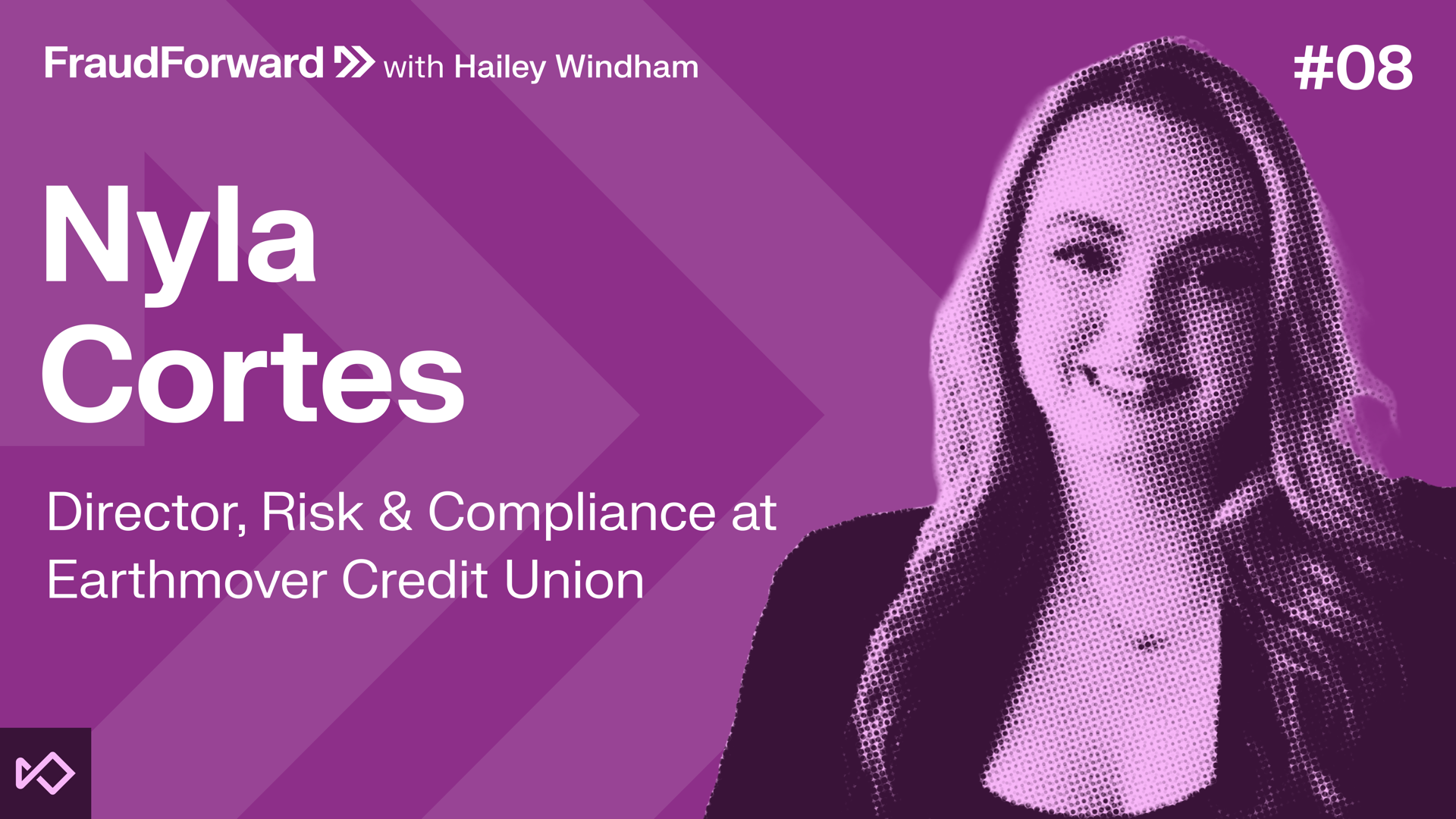
In this episode, I sit down with Nyla Cortes, Director of Compliance at Earth Mover Credit Union. Nyla brings a really practical perspective to the conversation because she works at the intersection of compliance and operations every day.
We talk about how financial compliance strengthens fraud prevention in real operational environments like call centers. Not in theory, but in the day-to-day work teams are doing.
Things like:
One thing I really appreciate about Nyla’s perspective is how she frames compliance. It is not about bureaucracy or paperwork. It is about creating structure so employees know exactly how to respond when something feels off.
When fraud teams, BSA teams, and compliance leaders communicate consistently, institutions gain a much clearer picture of risk across departments.
And that clarity matters.
If you liked this episode, be sure to subscribe and review the podcast on iTunes, Spotify, YouTube, or wherever you listen to podcasts. It really helps more fraud fighters find these conversations.
Before we double click on the notes, I want to say something that I feel strongly about after years of working in fraud.
Financial compliance is not separate from fraud prevention.
In many ways, it is the structure that allows fraud programs to function consistently across departments.
When I think about call center fraud risk, one thing always stands out to me. These environments move quickly.
Employees are talking with members in real time. Social engineering attempts can happen during a single conversation. Decisions sometimes have to be made quickly.
That is where financial compliance becomes incredibly valuable.
It provides the structure that helps frontline employees know exactly what to do.
Clear procedures answer questions like:
When compliance and operations alignment is strong, call center fraud risk becomes much easier to manage.
Employees know how to act when something feels off. They know how to report it. And they know leadership supports those decisions.
That kind of clarity protects both members and employees.
One of the things Nyla and I talked about a lot is empowerment.
Frontline employees are often the first people to detect fraud signals. But they can only do that effectively if they understand the manipulation tactics scammers use.
That is why frontline fraud training is so important.
When employees understand common social engineering tactics, they start noticing patterns like:
Training helps employees recognize these red flags.
But empowerment also requires strong internal fraud reporting systems.
When escalation procedures are clear and accessible, employees feel confident raising concerns.
Cross-department risk communication ensures that information coming from call centers reaches fraud and compliance teams quickly.
That coordination makes a huge difference in detection speed.
Another piece of this conversation that I really appreciated was Nyla’s perspective on reporting.
Suspicious Activity Reports are often seen as regulatory requirements, but they are much more than that.
To me, they represent institutional awareness.
Strong SAR documentation and consistent fraud case documentation practices create audit ready fraud processes. They also improve financial crime reporting accuracy.
When BSA and fraud teams collaborate closely, reporting quality improves because context is shared.
Teams align on language.
Risk patterns become clearer.
Regulatory reporting becomes easier to defend.
And something I have seen over time is that strong reporting practices build trust internally.
When teams trust the reporting process, they communicate more openly and collaborate more effectively.
Financial compliance becomes the connective tissue that keeps fraud prevention programs running smoothly.
Financial compliance is not just about meeting regulatory expectations.
From my perspective, it is about building the operational structure that allows fraud programs to work effectively.
When institutions invest in:
They create environments where fraud detection improves, documentation strengthens, and member protection becomes more consistent.
That alignment is what sustainable fraud prevention programs look like.
The mission stays the same:
The future of banking fraud prevention depends on community.
The future of credit union fraud prevention depends on collaboration.
The future of fraud industry evolution depends on shared intelligence and values alignment.
We are leveling up.
And we are doing it together.
Stay vigilant, stay informed, and keep moving fraud forward.