SardineCon SF/2026

Learn More
FRAUDFORWARD
#59

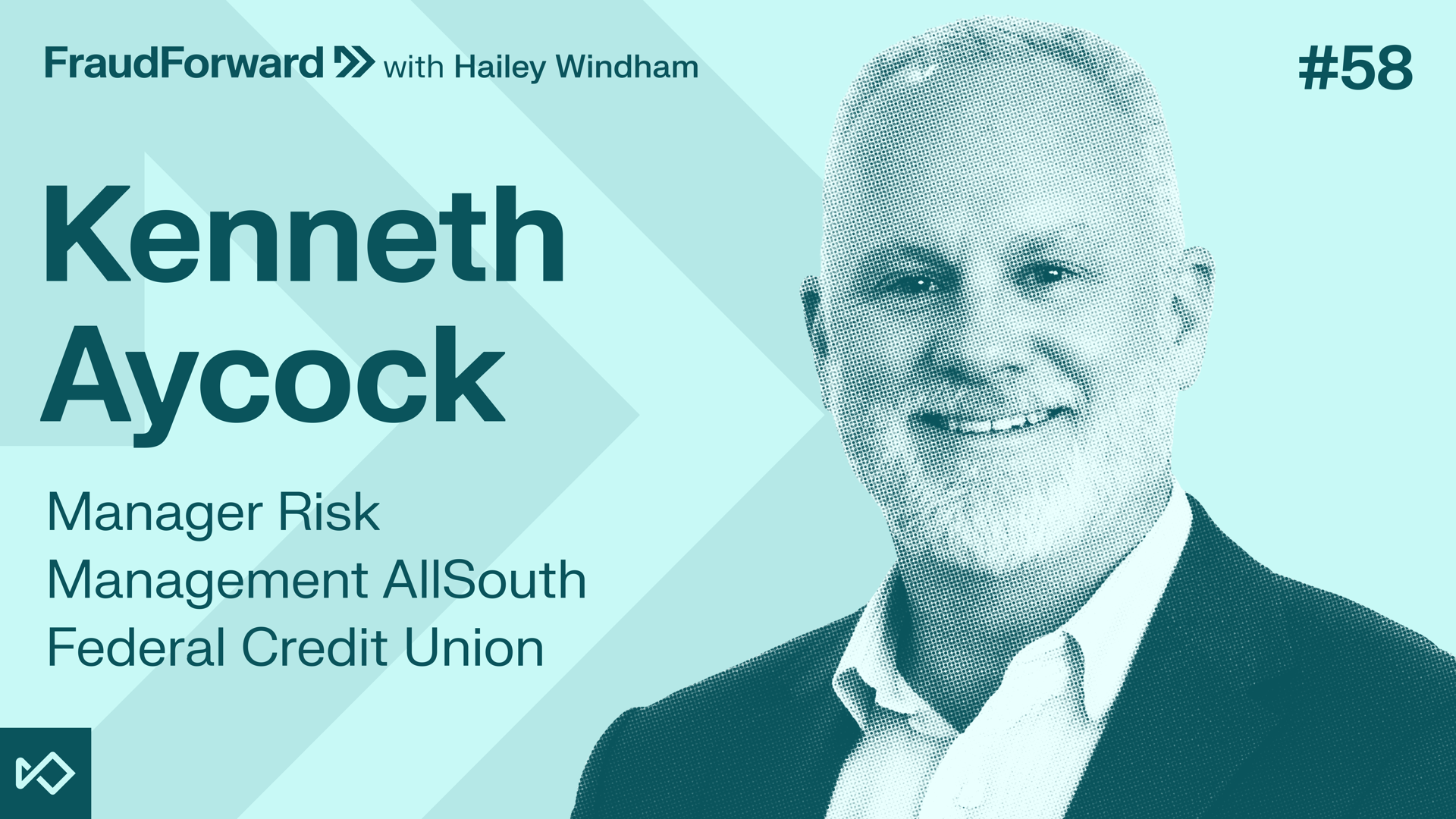
Fraud Prevention for Banks and Credit Unions with Kenny Aycock

35 min
Fraud Prevention for Banks and Credit Unions with Kenny Aycock

What’s up fraud fighters, and welcome to Fraud Forward!

Fraud Forward is powered by Sardine.

Alright, let’s get into it. Fraud Prevention for Banks and Credit Unions is getting defined by leadership discipline and investigative rigor more than ever. Tools matter. Technology matters. But I want to be really clear, the institutions that sustain strong outcomes are the ones that combine layered controls with structured investigative processes and coordinated partnerships.

In this episode, I’m talking with Kenny Aycock, Manager of Risk Management at AllSouth Federal Credit Union. Kenny brings a law enforcement mindset into financial institution risk management, and that shows up in the way he thinks about cases. He has more than two decades of experience serving on federal task forces investigating violent crime and organized activity, and he translates that investigative foundation into fraud work in a way that is practical and repeatable.

Because fraud teams do not need more noise, they need clarity. They need a process. They need documentation that holds up. And they need leadership that makes escalation easy, not political.

Why this matters for fraud fighters

Impersonation scams, account takeovers, and elder abuse are rising fast, and they are not rising in a clean, predictable way.

Here is what I see over and over in digital banking fraud response and day to day investigations:

  • Impersonation scam prevention breaks down when frontline staff hesitate or escalation is unclear
  • Account takeover prevention fails when behavior signals are treated like minor alerts instead of a developing storyline
  • Elder financial abuse detection gets delayed when teams do not have victim-sensitive scripts and structured protocols
  • Real time fraud detection is only as good as the investigative follow-through behind it
  • Fraud team leadership is what turns a signal into a solved case, or a signal into a loss

Criminals are counting on your teams being tired, siloed, and uncertain. This episode is about building operational confidence and member protection strategies that actually work.

What you’ll hear in this episode

  • How investigative techniques translate into financial institution risk management and improve outcomes
  • Strategies for impersonation scam prevention and account takeover prevention that reduce hesitation
  • Strengthening elder financial abuse detection through frontline awareness and clear protocols
  • The role of fraud team leadership in accelerating case resolution and documentation quality
  • Why law enforcement collaboration in fraud investigations improves response and recovery

You should listen to this episode if you

  • Fraud or risk management leadership responsibilities span multiple typologies and you need a repeatable approach
  • Account takeover or impersonation investigations are increasing and your team is feeling the volume
  • Elder financial abuse detection frameworks are under review and you want stronger member protection strategies
  • Partnerships with law enforcement agencies are being strengthened and you want smoother coordination
  • You are building credit union fraud prevention strategies or community bank fraud prevention and want more investigative rigor in the process

If you liked this episode, follow Fraud Forward on Spotify, Apple Podcasts, YouTube, or your preferred platform for executive-level discussions on fraud and institutional risk.

Episode notes and key takeaways

Investigative discipline turns signals into outcomes

Fraud Prevention for Banks and Credit Unions gets stronger when investigative discipline is embedded into daily operations.

Kenny’s experience highlights a simple truth. Real time fraud detection gives you visibility, but investigative follow-through determines the outcome.

What that looks like operationally:

  • Structured intelligence gathering and disciplined case documentation
  • Pattern analysis across account behavior, transaction anomalies, and communication inconsistencies
  • Clear timelines that help teams connect small signals into one story
  • Consistent notes that support recovery efforts and regulatory reporting

This approach improves fraud detection accuracy because it reduces guesswork and tightens decisioning.

Impersonation scam prevention starts at the frontline

Let me just assure you, impersonation scam prevention lives and dies at the frontline.

Social engineering in digital banking environments exploits trust and urgency, and criminals will pressure members to move fast and avoid scrutiny.

What strengthens member protection strategies here:

  • Clear internal escalation pathways that remove hesitation
  • Frontline coaching on what to listen for, urgency language, secrecy cues, and script-like responses
  • Documentation that captures context, not just transaction details
  • A culture where staff are supported when they slow something down

When escalation is easy, prevention is faster.

Account takeover prevention is a behavioral story, not one alert

Account takeover prevention works best when teams treat it like a storyline.

Practical indicators to watch and connect:

  • Behavioral inconsistencies that do not match the member’s normal patterns
  • Repeated authentication attempts and reset loops
  • Sudden account profile changes, contact info shifts, device changes, or new payment rails
  • Communication inconsistencies, tone shifts, and scripted explanations

Bank fraud risk management improves when these signals are enriched and investigated as a connected narrative, not isolated events.

Elder financial abuse detection requires sensitivity and structure

Elder financial abuse detection requires heightened sensitivity and structured protocols because manipulation changes behavior.

Vulnerable members may defend suspicious transactions. They may repeat coached explanations. They may insist it is their idea.

Risk management in credit unions improves when teams have:

  • Scenario-based training that reinforces red flags and escalation ownership
  • Practical intervention scripts that protect dignity while creating a pause
  • Clear escalation steps so staff do not feel like they are acting alone
  • Proactive outreach campaigns that strengthen prevention before funds move

Fraud team leadership is what empowers staff to intervene appropriately and consistently.

Law enforcement collaboration improves speed and recovery

Law enforcement collaboration in fraud investigations accelerates response timelines when the relationships exist before the crisis.

Established connections with local and federal agencies support:

  • Faster intelligence exchange
  • More coordinated recovery efforts
  • Clear expectations for what documentation helps build a case
  • Stronger alignment with external investigative processes

Cross industry fraud collaboration also matters. When institutions share patterns responsibly, disruption capability increases.

Leadership makes prevention durable

Leadership implications come down to codifying what works.

Fraud investigation best practices cannot live only inside one person’s brain or one team’s habits. They have to be built into governance frameworks with:

  • Consistent communication and training
  • Transparent case review processes
  • Documented escalation pathways
  • Repeatable standards for case documentation and decisioning

Fraud Prevention for Banks and Credit Unions becomes durable when investigative rigor and community engagement operate together, and when fraud team leadership makes it easier for teams to do the right thing quickly.

The evolution of Banking on Fraudology

The mission stays the same:

  • Elevate fraud prevention education.
  • Strengthen banking community leadership.
  • Support real operators inside community banks and credit unions.
  • Build durable fraud community building frameworks.
  • Advance fraud prevention thought leadership that is grounded, not hyped.

The future of banking fraud prevention depends on community.

The future of credit union fraud prevention depends on collaboration.

The future of fraud industry evolution depends on shared intelligence and values alignment.

We are leveling up.

And we are doing it together.

Stay vigilant, stay informed, and keep moving fraud forward.
Host
A blonde woman in a black blazer smiles slightly against a purple background.
Hailey Windham
Fraud Forward, Sardine