


#12128 min
What’s up fraud fighters, and welcome to Fraud Forward!
Okay, I am going to say something that might make a few people squirm, and I mean it with love. If your program feels like an assembly line of alerts, clicks, and paperwork, you are not alone, but you also do not have to stay there. This episode is about human centered financial crime, and it is one of my favorite conversations because it pulls us out of autopilot and drops us right back into why we do this work in the first place.
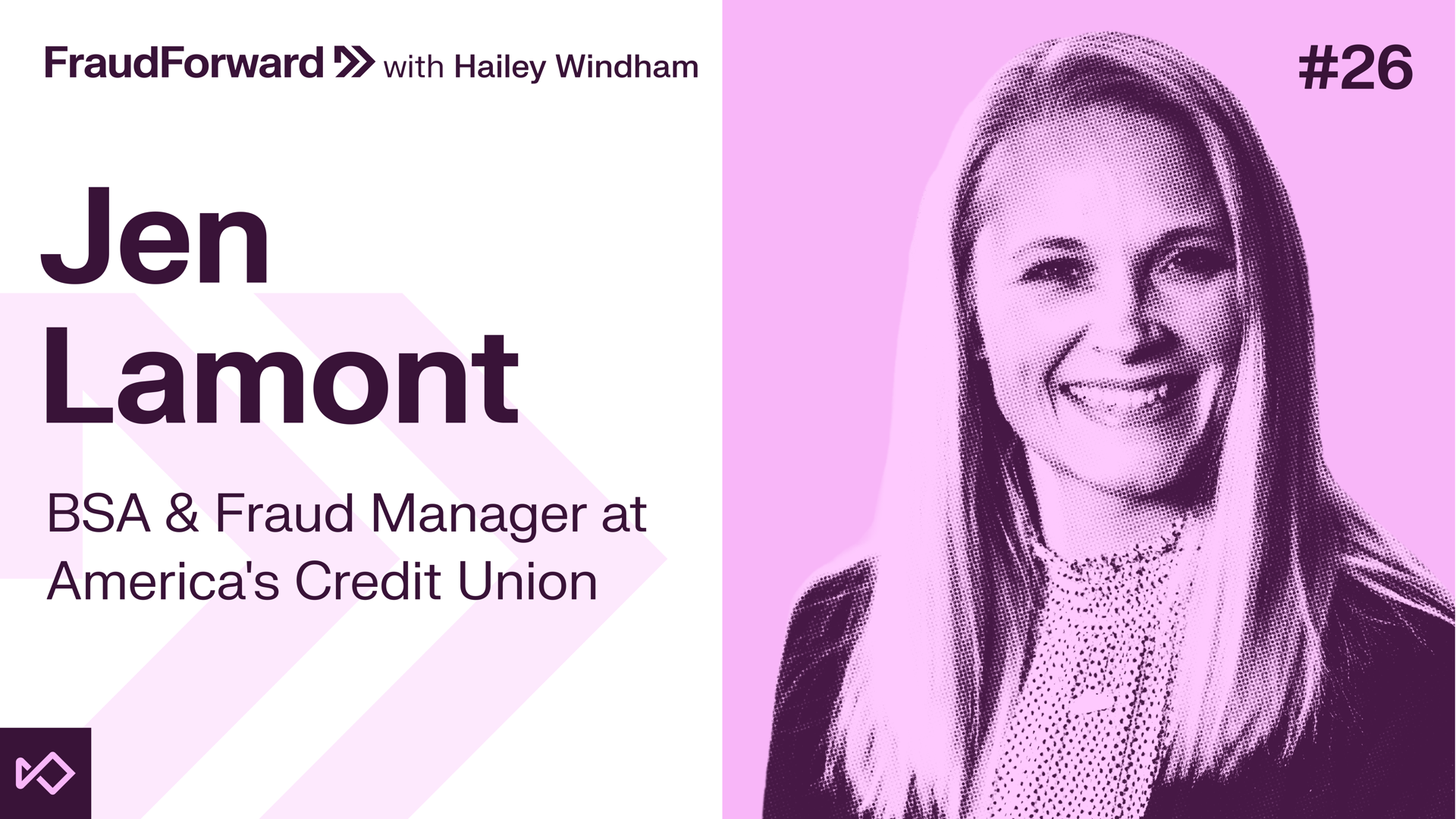
I am sitting down with Jen Lamont, who brings a BSA compliance officer perspective and real fraud team leadership to the table. And what I love about Jen is she is not preaching from a pedestal. She is talking about the day-to-day reality of fraud and BSA work and how one mindset shift can change everything. We riff on Richard Stock’s article, “Making a Small Change that Will Bring Big Change,” and fraud fighters, it is exactly that. Small change, big change.
Let’s reset the room for a moment. Alerts and SARs are not just regulatory tasks. They are human stories. They represent potential victims, families, and communities that are getting targeted. That is the core of a victim-focused investigation approach, and it is also how financial crime empathy becomes a performance tool, not a feel-good slogan.
When I say human centered financial crime, I mean I want every person working a case to feel the connection between what they are doing and protecting members from scams. Not as a guilt trip, but as fuel. Because when your work feels meaningless, burnout moves in fast. And when your work feels purposeful, you can still have hard days, but you do not feel hollow.
Jen and I talk about how this mindset shift strengthens fraud and AML collaboration. It changes the questions teams ask. It improves how frontline and BSA alignment works in practice. It makes AML case management mindset more thoughtful, because you are not just “closing a case,” you are clarifying risk and protecting real people.
And yes, it improves quality. SAR narrative quality improvement naturally follows when investigators understand the context and financial crime impact awareness behind what they are documenting. You write differently when you know a member is being manipulated, when you know a family is affected, when you know the harm is real.
We also get honest about investigator burnout prevention and fraud operations morale. I have watched too many powerhouse fraud fighters burn out because their environment treated their work like a compliance treadmill. That is why this conversation matters. This is compliance beyond checkbox tasks, without sacrificing rigor.
If you are in a credit union fraud strategy role, a community bank leader role, or you are trying to build member protection culture while keeping regulators satisfied, this episode is going to land.
If you liked this episode, be sure to subscribe and review the podcast on iTunes, Spotify, YouTube, or wherever you listen to podcasts. It really helps with getting the word out.
Let me just assure you, human centered financial crime does not make you “less compliant.” It makes you better.
A victim-focused investigation approach reframes casework in a way that improves decisions:
And this is where financial crime empathy matters. Empathy helps you interpret behavior, assess risk, and communicate with dignity. It strengthens clarity. It strengthens intent. It strengthens follow-through.
Now let’s get into the operational side.
Fraud and AML collaboration is where patterns become visible. When you isolate teams, you isolate signals. When you connect them, you create clarity.
Here is what improves when teams align:
This is also where member protection culture becomes real. Not as a poster, as an operating system.
Fraud fighters, I am going to say this plainly. Burnout does not only come from volume. Burnout comes from meaninglessness.
Investigator burnout prevention starts with fraud investigation purpose:
When teams understand risk management human impact, fraud operations morale improves. People can handle hard work when they know it matters.
I loved hearing Jen talk about mentorship in fraud careers because it is one of the fastest ways to build stronger leaders.
Mentorship helps emerging leaders:
Human centered financial crime is not a soft shift. It is a cultural and operational upgrade. It strengthens institutional resilience and customer trust at the same time.
The mission stays the same:
The future of banking fraud prevention depends on community.
The future of credit union fraud prevention depends on collaboration.
The future of fraud industry evolution depends on shared intelligence and values alignment.
We are leveling up.
And we are doing it together.
Stay vigilant, stay informed, and keep moving fraud forward.