

#12128 min
What’s up fraud fighters, and welcome to Fraud Forward!
Alright fraud fighters, I need you locked in for this one. When we talk about human trafficking factors, we are not talking about an abstract compliance topic. We are talking about harm happening to real people, and yes, financial institutions can be one of the few places where the signals show up early enough to matter.
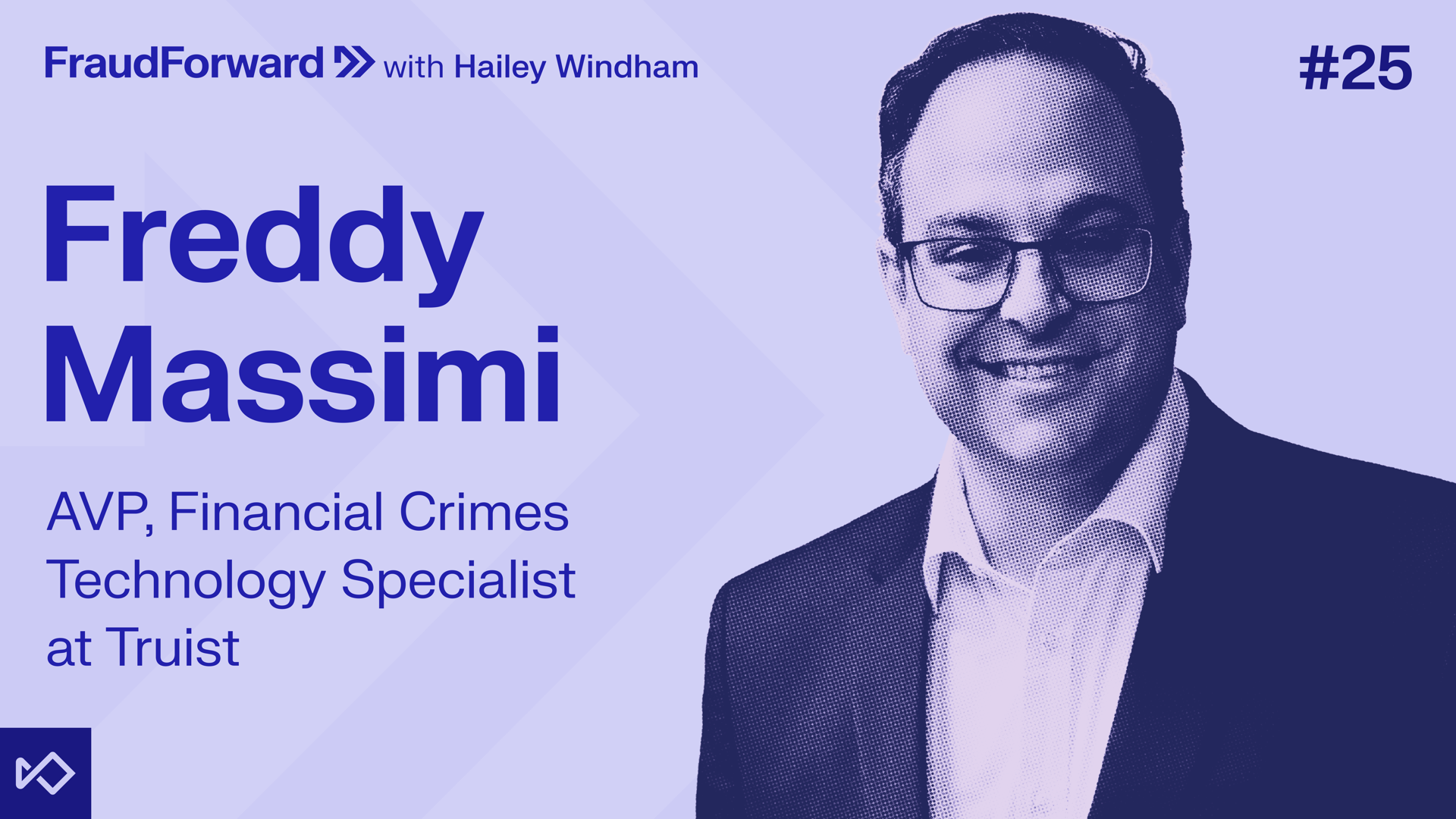
In this episode, I am sitting down with Freddy Massimi, program lead at the Anti-Human Trafficking Intelligence Initiative, and I am telling you, this conversation is equal parts practical and sobering. Because Freddy is living in the typologies. He is seeing what human trafficking financial indicators look like in the real world, and he is helping teams translate that into action inside transaction monitoring and frontline response.
Let’s reset the room for a moment. Human trafficking factors often surface long before a case is formally identified, and they show up in two places we control:
And if you are thinking, “We do not see trafficking,” I want to gently push back. You might not be labeling it that way, but you may be seeing pieces of it. The work is learning how to connect those pieces without guessing, without bias, and with a disciplined escalation process.
Freddy and I talk about transaction monitoring trafficking typologies that go beyond big-dollar alerts. Repetitive small transfers, strange cash flow cycles, third-party influence over an account, unusual withdrawals that do not match stated purpose, those patterns can be human trafficking financial indicators when you put them in context. And context is everything, because child exploitation transaction signals and elder financial exploitation red flags can overlap with scam activity. That overlap is why fraud and AML collaboration matters. You need multiple lenses.
We also get into frontline trafficking red flags, because branches and call centers still matter. Hesitation, scripted responses, third-party control in the room, someone watching and speaking for the customer, those are moments where trained staff can notice something, document it, and trigger suspicious activity escalation protocols.
And then we talk about the collaboration layer. ATII intelligence briefings and ATII intelligence briefings are the kind of case-based insights that help teams sharpen SAR reporting trafficking cases, strengthen BSA trafficking investigations, and improve financial institution compliance training without turning it into generic annual training that nobody remembers.
Law enforcement information sharing and cross-sector anti-trafficking efforts matter because no single institution sees the full network. We also touch on Operation Shamrock partnership and what it looks like when the industry commits to real financial crime intelligence sharing instead of siloed alerts.
If you work fraud, AML, BSA, compliance, or you lead vulnerable customer protection programs, this episode will give you a clearer picture of what to look for, how to train, and how to escalate responsibly.
If you liked this episode, be sure to subscribe and review the podcast on iTunes, Spotify, YouTube, or wherever you listen to podcasts. It really helps with getting the word out.
Let me just assure you, the signals are often subtle until you know what you are looking for.
Human trafficking financial indicators can show up as patterns like:
That is why transaction monitoring trafficking typologies cannot be only threshold-based. You have to look at sequence, frequency, and context.
And here is where it gets tricky. Child exploitation transaction signals and elder financial exploitation red flags can overlap with scam typologies. That overlap does not mean “everything is trafficking.” It means you need disciplined documentation and escalation so you can sort what you are seeing responsibly.
This is where frontline trafficking red flags matter too. A trained branch or call center teammate can observe:
When frontline teams are trained to document and escalate, early detection improves.
Now let’s get into what makes this scalable. Collaboration.
Fraud and AML collaboration improves visibility because each team sees different parts of the risk picture. BSA trafficking investigations and SAR reporting trafficking cases get stronger when the case narrative includes shared context and structured documentation.
ATII intelligence briefings help teams sharpen what “real” looks like by providing case-based examples and typology updates. That makes financial institution compliance training more current and more usable.
And law enforcement information sharing matters because networks do not operate inside one institution. Cross-sector anti-trafficking efforts and financial crime intelligence sharing increase the likelihood of disruption, especially when institutions align on patterns and escalation.
This is where we have to be careful and human.
Victims may hesitate to disclose exploitation because fear and coercion are part of the control. Financial crime victim advocacy and vulnerable customer protection require calm, respectful engagement and a structured path forward.
Suspicious activity escalation protocols should support:
Trafficking risk awareness programs should reinforce that identifying human trafficking factors is not solely a monitoring challenge. It is a coordinated effort grounded in vigilance, empathy, and disciplined reporting.
The mission stays the same:
The future of banking fraud prevention depends on community.
The future of credit union fraud prevention depends on collaboration.
The future of fraud industry evolution depends on shared intelligence and values alignment.
We are leveling up.
And we are doing it together.
Stay vigilant, stay informed, and keep moving fraud forward.