


#12128 min
What’s up fraud fighters! Welcome to Fraud Forward.
Today I want to talk about something that shows up in almost every major fraud investigation we deal with, but still does not get enough attention. Money mules.
When we talk about scams, account takeovers, or synthetic identity fraud, we often focus on the initial attack. But the truth is the crime does not work unless the money can move.
And that is where mule networks come in.
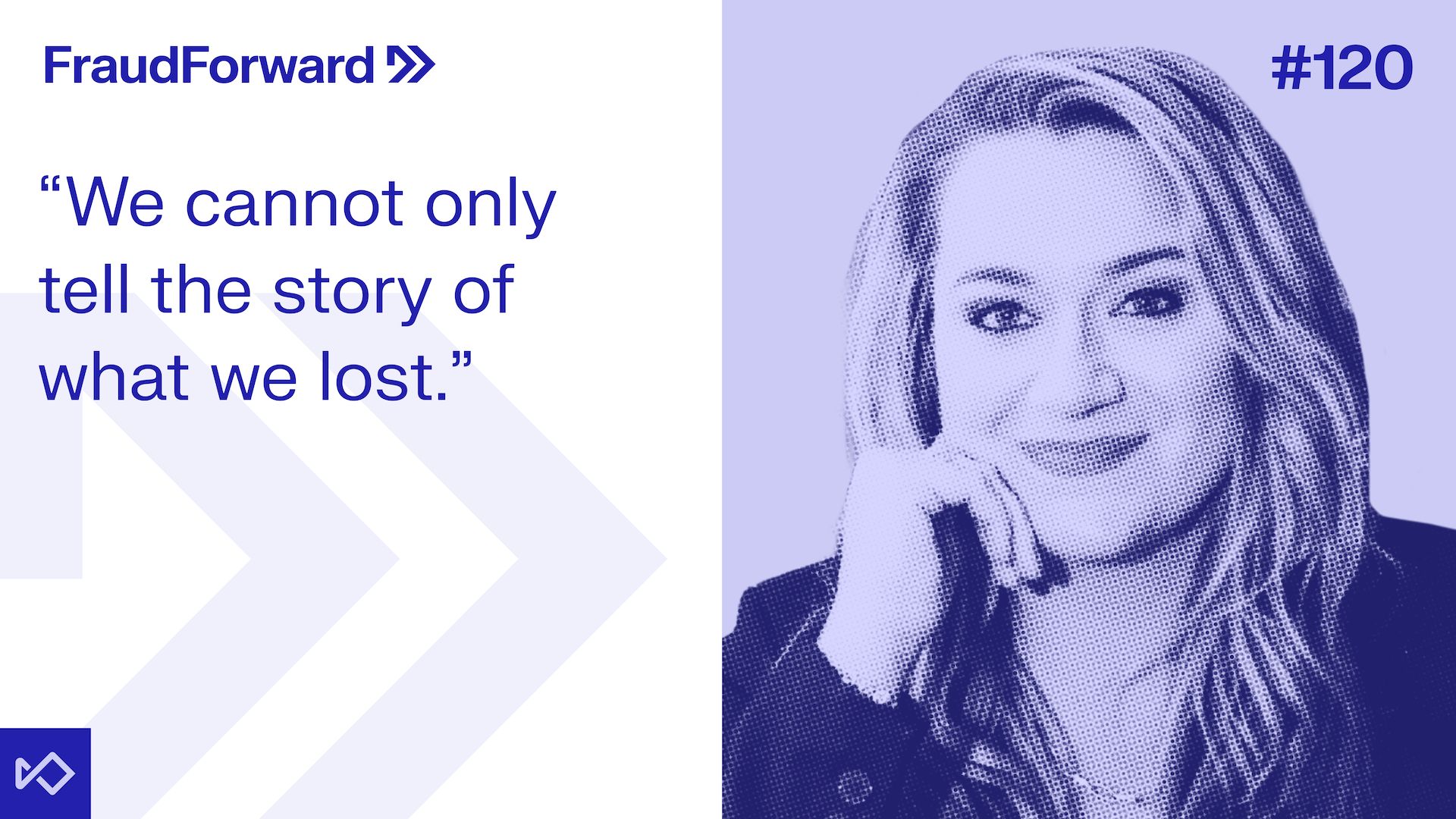
In this episode, I sit down with Karen Boyer to talk about the real impact of money mules on banking systems and why financial institutions need to think about mule activity as infrastructure for organized crime, not just isolated account abuse.
Because let me just assure you, these networks are sophisticated.
Money mules are used to move illicit funds across accounts, across jurisdictions, and across payment rails. Sometimes the mule understands exactly what they are doing. Other times they are recruited through employment scams, social media outreach, or coercion.
Either way, the end result is the same.
Funds tied to scams, synthetic identity fraud growth, and cross-border financial crime move through legitimate financial institutions before anyone has a chance to stop them.
Karen and I spent a lot of time talking about where banks and credit unions can intervene. Because the truth is traditional compliance reviews alone are not enough anymore.
If we want to disrupt these networks, we have to focus on the point of money movement.
That means real-time transaction monitoring, faster escalation, and stronger collaboration between fraud and BSA teams.
We also talk about how recruitment tactics are evolving. Social media mule recruitment is accelerating, and emerging threats like generative AI fraud and deepfake financial scams are making detection more complex.
So this episode is really about operational reality.
If you are working inside fraud prevention, compliance, or financial crime investigations, understanding the impact of money mules is critical to building stronger controls.
If you liked this episode, be sure to subscribe and review the podcast on iTunes, Spotify, YouTube, or wherever you listen to podcasts. It really helps more fraud fighters find these conversations.
Before we double click on the notes, I want to reset the room for a moment.
Money mules are often talked about like they are individual bad actors.
But when you step back and look at the bigger picture, they function as financial infrastructure for criminal organizations.
And if we do not disrupt the movement of money, the crime continues.
One thing Karen and I really wanted to emphasize in this conversation is that mule activity rarely happens in isolation.
When we investigate these cases, we usually find networks.
Those networks move funds through layers of accounts in order to obscure the origin of the money and complicate investigations.
Recruitment tactics vary, but some of the most common ones include:
In many cases the mule may not fully understand the broader criminal operation they are supporting.
But the role they play is critical.
Without mules moving funds, many fraud schemes would stall before criminals could access the money.
That is why mule activity needs to be viewed through a network lens rather than an account-by-account investigation.
One of the things I have learned in fraud operations is that timing matters.
Once funds leave the institution and move across multiple payment rails or jurisdictions, recovery becomes much more difficult.
That is why real-time transaction monitoring is so important.
When institutions monitor activity at the moment funds are moving, they have a much better chance of interrupting the flow.
Some of the signals that may indicate mule activity include:
Strong collaboration between fraud and BSA teams also improves response speed.
When institutions align monitoring, investigation, and reporting under a coordinated framework, they can escalate cases faster and document activity more effectively.
Another theme Karen and I discussed is the importance of collaboration.
Money mule networks do not operate within a single institution.
They operate across financial institutions, telecommunications platforms, and digital ecosystems.
That means disrupting recruitment pipelines requires coordination across sectors.
We are seeing stronger collaboration emerge in areas like:
At the same time, emerging threats like generative AI fraud and deepfake financial scams are increasing the complexity of these investigations.
That means financial institutions must continue modernizing systems and strengthening cross-sector engagement.
Money mules may appear as individual account holders on the surface.
But in reality they are a critical layer of infrastructure supporting organized financial crime.
When institutions focus on monitoring the point of money movement, strengthen collaboration between fraud and BSA teams, and engage with external partners, they improve their ability to disrupt these networks.
Stopping the flow of funds is one of the most effective ways we can weaken organized fraud operations.
The mission stays the same:
The future of banking fraud prevention depends on community.
The future of credit union fraud prevention depends on collaboration.
The future of fraud industry evolution depends on shared intelligence and values alignment.
We are leveling up.
And we are doing it together.
Stay vigilant, stay informed, and keep moving fraud forward.