

#12128 min
What’s up fraud fighters, and welcome to Fraud Forward!
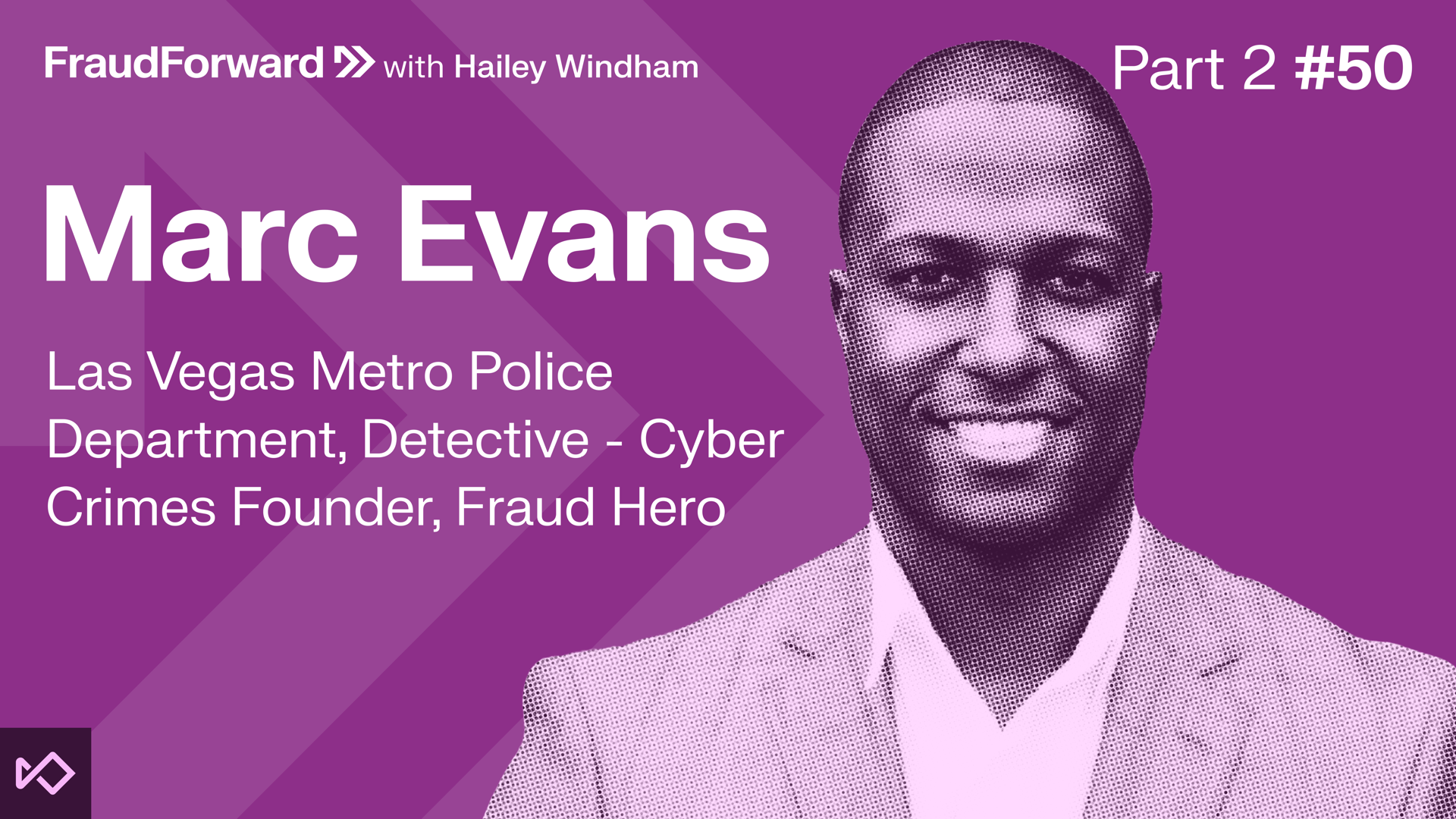
Alright, we are continuing the conversation with fraud investigator Marc Evans, and this episode hits one of the biggest quiet threats to modern fraud prevention. An information silo can undermine even the strongest fraud prevention strategy, and the scary part is you do not always notice it until the money is gone.
Because when departments, institutions, or agencies operate in isolation, fraudsters exploit the gaps between them. They live in the handoffs. They win in the delays. And they count on organizational communication gaps and internal fraud reporting barriers to slow you down just long enough for funds to disappear.
Marc has worked more than 500 cases, and he breaks down why cross-sector fraud collaboration between banks, credit unions, and law enforcement is not a nice-to-have, it is operational infrastructure for modern fraud response.
Let’s reset the room for a moment. Fraudsters do not respect organizational boundaries. They move across institutions and jurisdictions, and they are counting on you to stay inside your lane.
Here is what information silo risk looks like in the real world:
And this is why fraud prevention strategy can look strong on the surface while still bleeding loss underneath. When information is trapped, your response timing collapses.
If you liked this episode, be sure to subscribe and review the podcast on iTunes, Spotify, YouTube, or wherever you listen to podcasts. It really helps with getting the word out.
Information silo risk does not always show up with flashing lights. It shows up quietly.
It shows up as:
Fraudsters move across institutions and jurisdictions without regard for boundaries. When organizational communication gaps persist, response slows and exposure grows. Let me just assure you, criminals are not waiting for you to get alignment.
Marc shares a real-world first-party fraud case study where early communication between a credit union and investigators prevented a $25,000 loss.
And I want you to catch this. The key difference was not new technology. It was communication.
The success factors were clean and repeatable:
Breaking down fraud silos allowed teams to validate concerns quickly and escalate effectively. That is what winning looks like in everyday banking.
Fraud-as-a-service schemes are increasing complexity and speed.
These coordinated scam models work because roles are distributed:
Organized groups distribute tasks across multiple people, which makes financial crime coordination more difficult when institutions are working alone. That is why multi-agency fraud response and real-time fraud intelligence exchange matter so much.
Collaboration has to extend beyond individual institutions, because the fraud operation is already doing that.
Through the Fraud Hero education initiative, Marc emphasizes employee fraud education and customer fraud awareness as foundational defenses.
Education reduces hesitation, and hesitation is where losses happen.
Fraud prevention training programs should:
When education is consistent, information flows more freely and teams intervene earlier.
Cross-sector fraud collaboration strengthens prevention outcomes. When private sector fraud partnerships align with law enforcement efforts, institutions close visibility gaps that fraudsters rely on.
Removing information silo barriers is not optional. It is operational infrastructure for modern fraud prevention.
Fraud does not happen in silos, and neither should our solutions. 100 percent.
The mission stays the same:
The future of banking fraud prevention depends on community.
The future of credit union fraud prevention depends on collaboration.
The future of fraud industry evolution depends on shared intelligence and values alignment.
We are leveling up.
And we are doing it together.
Stay vigilant, stay informed, and keep moving fraud forward.