
#12128 min
What’s up fraud fighters, and welcome to Fraud Forward!
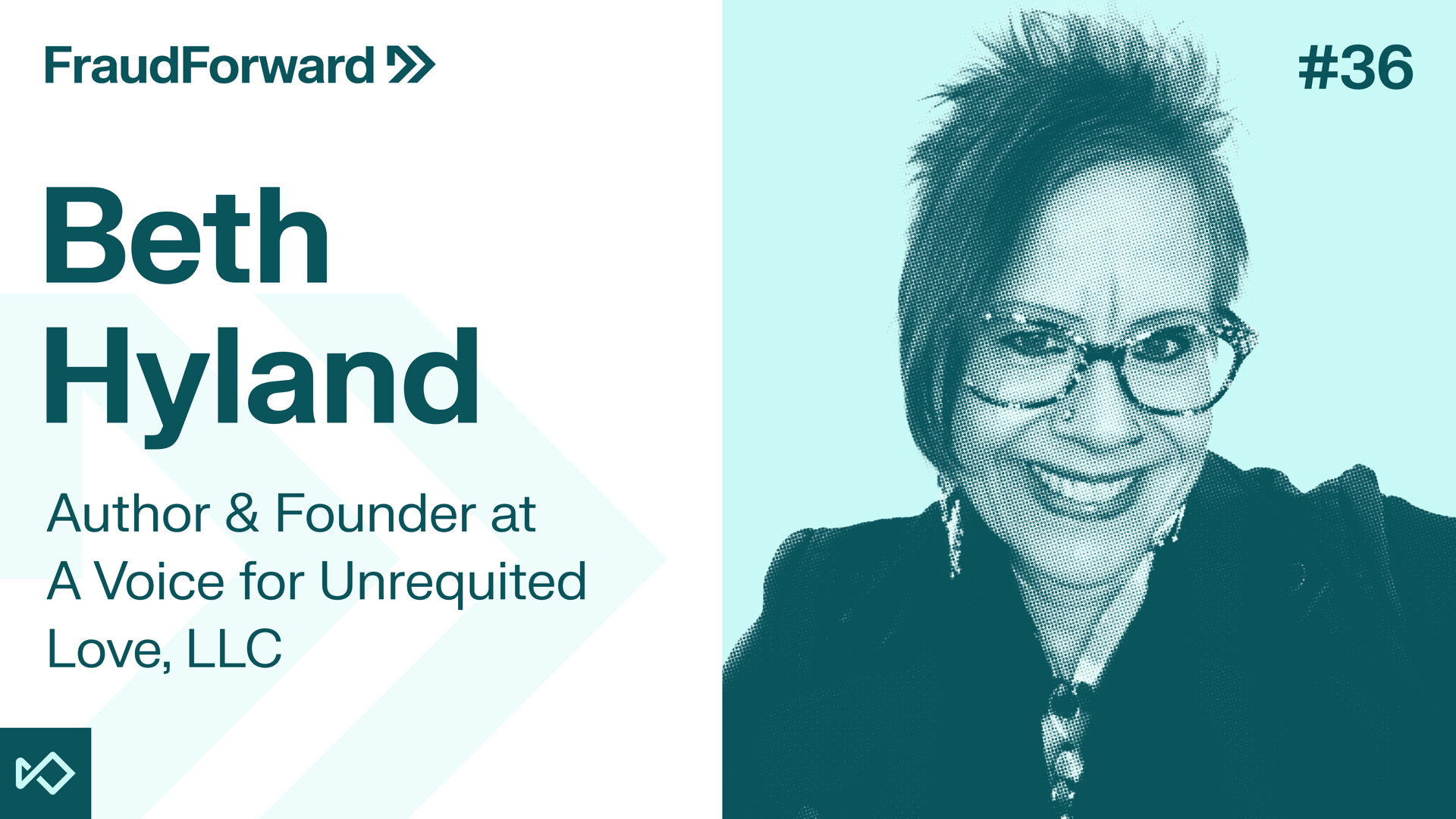
Alright, fraud fighters, I need you to take a breath with me before we get into this one, because this episode is heavy, and it is important. Today I am talking with Beth Hyland, and Beth is sharing her story as a romance scam victim. She was manipulated into sending $26,000 through an authorized wire scam to someone she truly believed was her partner. And I want to say this right away, not as a tagline, as a human response, my God, I’m so sorry this happened to you. It’s not your fault.
This is not an “educational” episode in the abstract. This is a real-life victim perspective fraud story, and I am bringing it to the mic because relationship-based financial scams and online dating fraud schemes keep wrecking people’s lives, and too many institutions still treat these wires like routine behavior until the money is gone.
Let’s reset the room for a moment. The fraud signal is not always the transaction. The fraud signal is the story.
Beth walks us through how emotional manipulation tactics build slowly. How social engineering relationships create trust over time. How secrecy gets reinforced. How the scammer isolates the victim and then coaches them, customer-coached payment stories, so when a teller or banker asks a question, the victim already has a rehearsed answer.
That dynamic is exactly why transaction monitoring alone is not enough. If your detection stack is waiting for a perfect rule hit, you will miss the human reality. And this episode shows the fraud detection blind spots that live in the gap between “the customer authorized it” and “the customer is being controlled.”
From the bank side, we talk about romance scam red flags and the moments I wish had been handled differently. Repeated wires. Payment urgency warning signs tied to fabricated emergencies. Shifting explanations. Resistance to questioning. Those are the patterns. Those are the scam escalation gaps. And when those signals are treated as normal, you get branch intervention failures that leave a customer alone in the worst moment of their life.
I want to double click on something that matters operationally. Direct but respectful questions can interrupt the psychological hold. A calm conversation can surface inconsistencies that a model cannot see. That is why fraud training for tellers is so critical, because the frontline is often the only place where the human story and the money movement collide in real time.
We also talk about what happens after the loss. Victim disclosure hesitation is real. People feel shame, confusion, and self-blame, and that long-term scam trauma can affect how they trust systems, people, even themselves. Beth describes that aftermath, and we talk about why compassionate fraud response changes recovery outcomes. The way a bank shows up after harm can determine whether there is a customer trust breakdown or a path back to safety.
We also touch on financial advisor scam recovery, because the recovery phase is not just “can we get the money back.” It is “can we stabilize the person.” And that is where empathy plus structure matters.
This episode is a clear call for early wire intervention steps, structured escalation, consistent documentation, and human-first engagement that still protects the institution. Because authorized transaction scam cases are not rare anymore, and we have to stop acting like “authorized” means “safe.”
If you liked this episode, be sure to subscribe and review the podcast on iTunes, Spotify, YouTube, or wherever you listen to podcasts. It really helps with getting the word out.
Let me just assure you, no one wakes up and decides to become a romance scam victim.
This is about emotional manipulation tactics that build trust over time. The scammer creates a relationship, then introduces urgency, secrecy, and control. That is how online dating fraud schemes become relationship-based financial scams that feel “real” to the victim.
Common patterns Beth describes that I want teams to recognize:
This is why a victim perspective fraud story is so valuable. It shows how the psychological hold forms, and why logic does not break it easily.
Now let’s talk about the operational side.
romance scam red flags often look like:
These are the moments where early wire intervention steps can matter. But too often, they become branch intervention failures because staff do not feel empowered, trained, or supported.
Here is what I want institutions to tighten:
When those pieces are missing, scam escalation gaps widen and fraud detection blind spots grow.
Fraud fighters, the recovery phase is not optional. It is part of the work.
After an authorized transaction scam, victims often experience:
This is where compassionate fraud response changes everything. The bank’s tone and structure can either create a customer trust breakdown or become the first step toward stability.
Financial advisor scam recovery can help here too, not as a sales moment, as a support moment. Clear guidance, calm reassurance, and respectful process help victims regain agency.
This episode reinforces that prevention is not just models. It is humans, structure, and empathy working together.
The mission stays the same:
The future of banking fraud prevention depends on community.
The future of credit union fraud prevention depends on collaboration.
The future of fraud industry evolution depends on shared intelligence and values alignment.
We are leveling up.
And we are doing it together.
Stay vigilant, stay informed, and keep moving fraud forward.