

#12128 min
What’s up fraud fighters, and welcome to Fraud Forward!
I am going to be real with you, sextortion scam detection is one of the most urgent things banks and credit unions can level up right now, especially if you serve teens, students, or youth accounts. Online blackmail targeting minors is rising, and it is not just a fraud problem. It is a safety problem. It is a mental health problem. It is a family crisis problem. And if we respond like it is “just another P2P dispute,” we will miss the moment where we could have protected a kid.
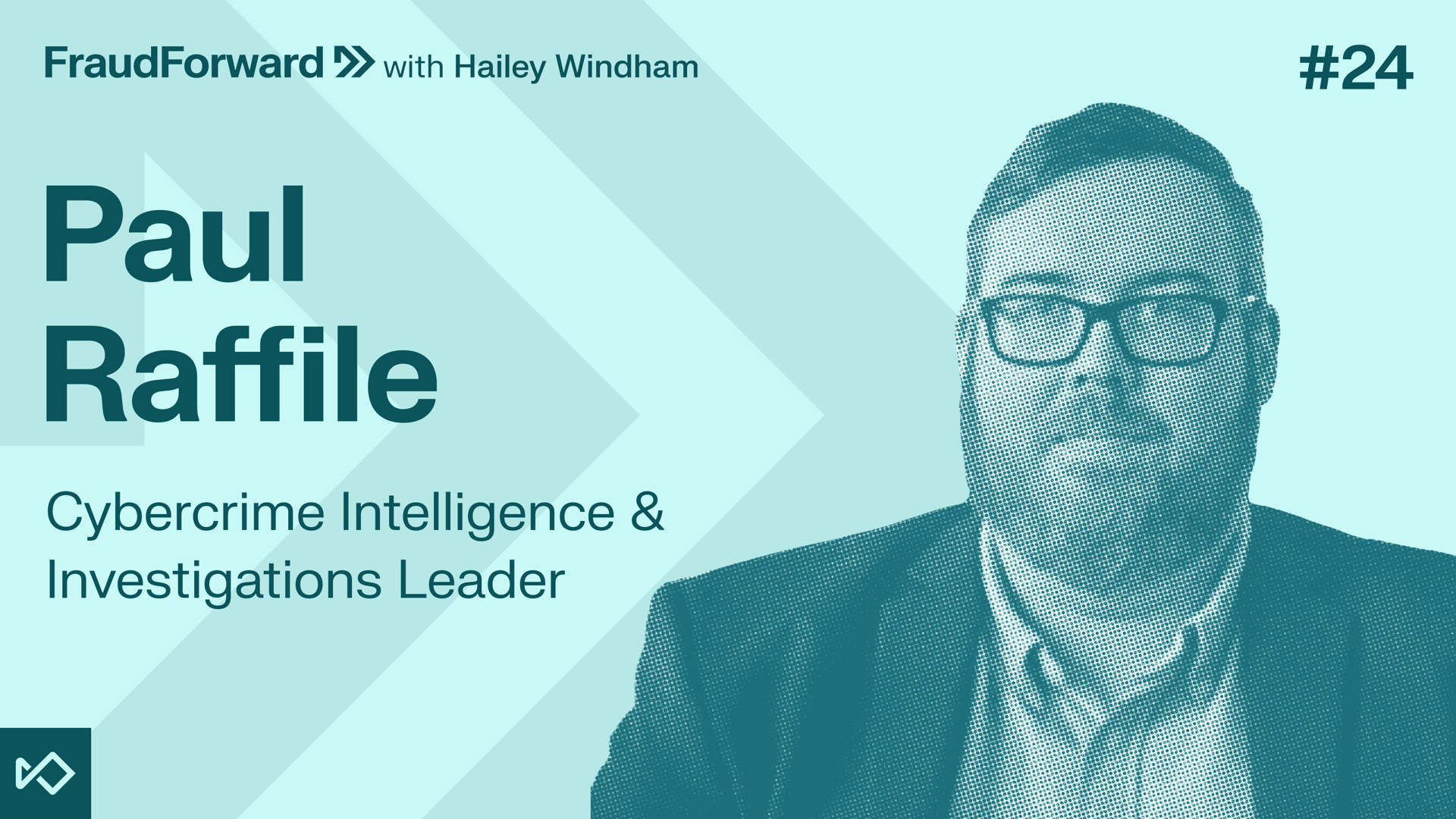
In this episode, I am talking with Paul Raffile, intelligence analyst and author of the A Digital Pandemic report, and this conversation hit me in the chest. Because Paul is not speaking from a distance. He is laying out how fast these cases escalate, how often peer-to-peer sextortion payments show up in patterns we can actually see, and how much damage happens when institutions do not have a consistent playbook.
Let’s reset the room for a moment. The criminal playbook here is psychological control. Social media exploitation scams pull a minor into a situation, isolate them, and then pressure them into sending money fast. And the money movement often looks like a string of small transfers, late at night, under urgency, with secrecy, and that is exactly why teen account fraud monitoring cannot be a copy-paste of adult monitoring.
I want to double click on the reality that youth account transaction monitoring is not just “watch for a big wire.” It is recognizing online coercion financial indicators in the small stuff. It is catching digital extortion payment patterns early enough that rapid fund recovery procedures can actually work. It is having account freezing protocols that teams can use without arguing about permissions for an hour while the kid is panicking.
Paul and I also talk about what resources matter when you are in the middle of a case. FBI sextortion guidance, Homeland Security Investigations resources, and the National Center for Missing and Exploited Children are not just “good to know.” They are part of a responsible response. We also talk about Gavin's Law South Carolina and why legislative attention matters, because institutions need clarity and urgency around what this threat really is.
And fraud fighters, I need to say this clearly. Sextortion scam detection must be paired with empathy. Minor customer fraud response has to prioritize safety and dignity. Bank victim support procedures are not optional. Teen suicide prevention fraud awareness is not a buzzword. It is a reality we have to take seriously in the way we train, escalate, and communicate.
If you are responsible for youth accounts, fraud programs, or customer protection strategy, I want you to take this episode and turn it into action.
If you liked this episode, be sure to subscribe and review the podcast on iTunes, Spotify, YouTube, or wherever you listen to podcasts. It really helps with getting the word out.
Let me just assure you, if you use generic monitoring for teen behavior, you are going to miss this.
Youth account transaction monitoring has to reflect the realities of online coercion. Peer-to-peer sextortion payments often look like:
Those are digital extortion payment patterns that can spike fast. And that is why teen account fraud monitoring has to be tuned for context, not just dollar thresholds.
Financial institution red flags sextortion teams should watch for include:
When we catch this early, rapid fund recovery procedures have a chance. When we catch it late, the money is gone and the harm is deeper.
Now let’s talk about what you do when the case is live.
I want teams to have resources ready, not scrambled:
When institutions build specialized fraud task forces or defined escalation groups, response becomes faster and more consistent. Gavin's Law South Carolina is also an important signal that this threat is being recognized more broadly, and that should push institutions to formalize account freezing protocols and case handling steps.
Cross-functional coordination matters, fraud, BSA, compliance, and frontline teams need the same playbook so minor customer fraud response does not depend on who picks up the phone.
I am going to say this as clearly as I can. Online blackmail targeting minors is trauma.
If a teen is being coerced, they are not thinking like an adult fraud case. They are scared. They are ashamed. They are isolated. So minor customer fraud response has to prioritize safety and dignity.
Bank victim support procedures should include:
And teen suicide prevention fraud awareness must be part of training because these cases can involve real crisis risk. Sextortion scam detection is not solely a technical challenge. It requires operational discipline, coordinated escalation, and a compassionate approach to protecting vulnerable customers.
The mission stays the same:
The future of banking fraud prevention depends on community.
The future of credit union fraud prevention depends on collaboration.
The future of fraud industry evolution depends on shared intelligence and values alignment.
We are leveling up.
And we are doing it together.
Stay vigilant, stay informed, and keep moving fraud forward.