Fraud and compliance investigations rarely stay inside one task. An analyst might start with an alert, research the person or business behind it, inspect connected accounts and devices, check the underlying data, and then decide what to do next. AI agents can take on much of that work. But if every agent lives in a different place and starts without context, analysts end up managing the agents instead of investigating the risk.
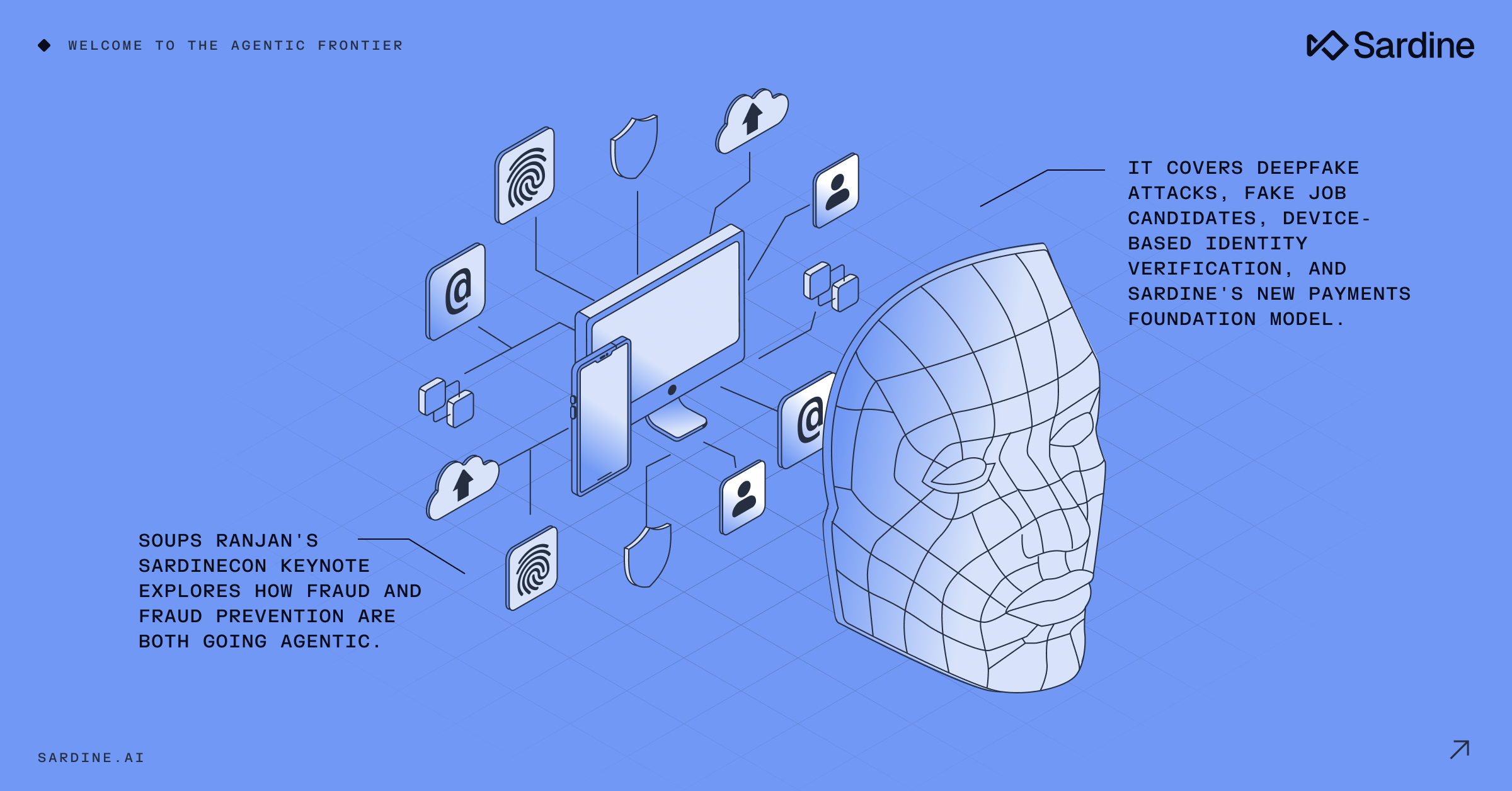
At SardineCon this year, Sardine CEO Soups Ranjan described the goal simply: fraud, compliance, and investigations teams should be able to sleep at night instead of getting pulled back into work because an attack scaled faster than a person could react. But that only works if the agents themselves fit into the way teams already operate.
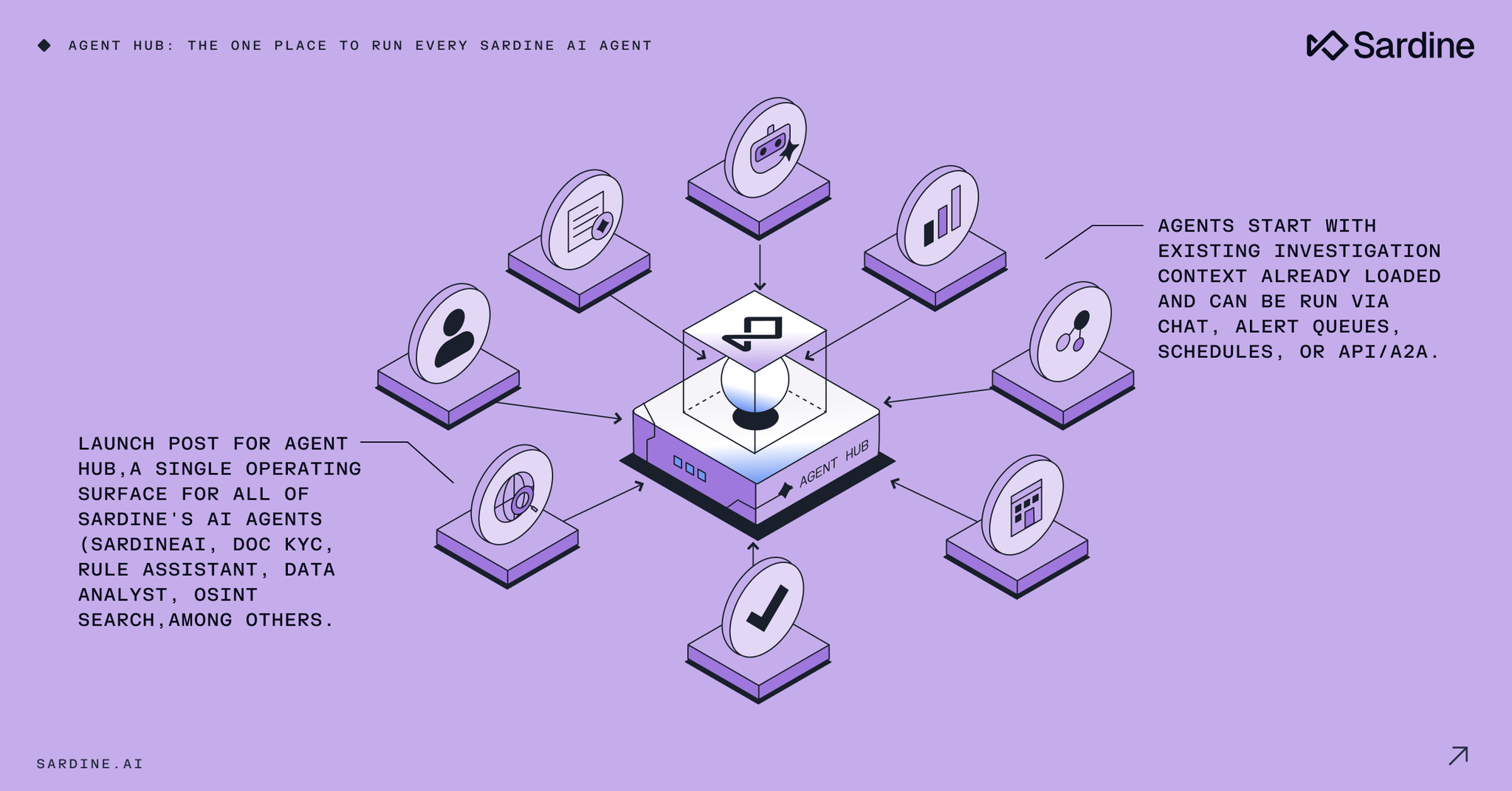
Agent Hub brings Sardine AI agents into one place, with the context of whatever you’re already looking at. You can now open a chat, run an agent automatically against new alerts, put one on a schedule, or evaluate a new or updated agent. The agent starts with the customer, transaction, session, alert, or other investigation context already in front of you instead of asking you to explain it all over again.
One place for every Sardine agent
Agent Hub brings together Sardine’s agents across investigation, fraud detection, data analysis, identity, and compliance. Today, that includes:
- Rule Assistant Agent: Discovers relevant features and drafts fraud detection rules from a plain-language description.
- Data Analyst Agent: Investigates data, validates results, and surfaces insights using SardineQL.
- Doc KYC Agent: Reviews identity documents, with OCR fallback and handling for name variations across documents.
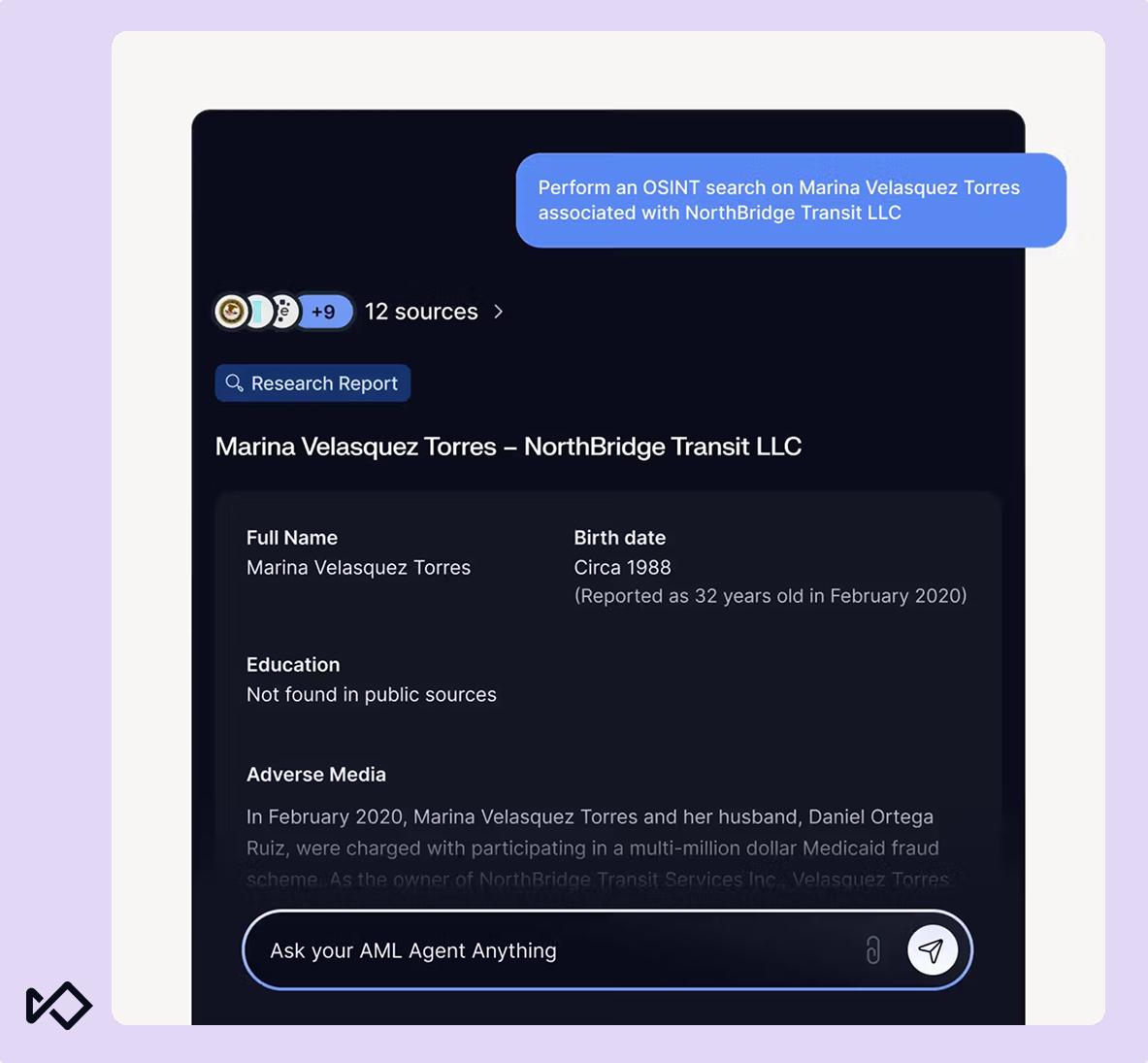
- OSINT Search Agent: Researches companies, people, and addresses using publicly available information.
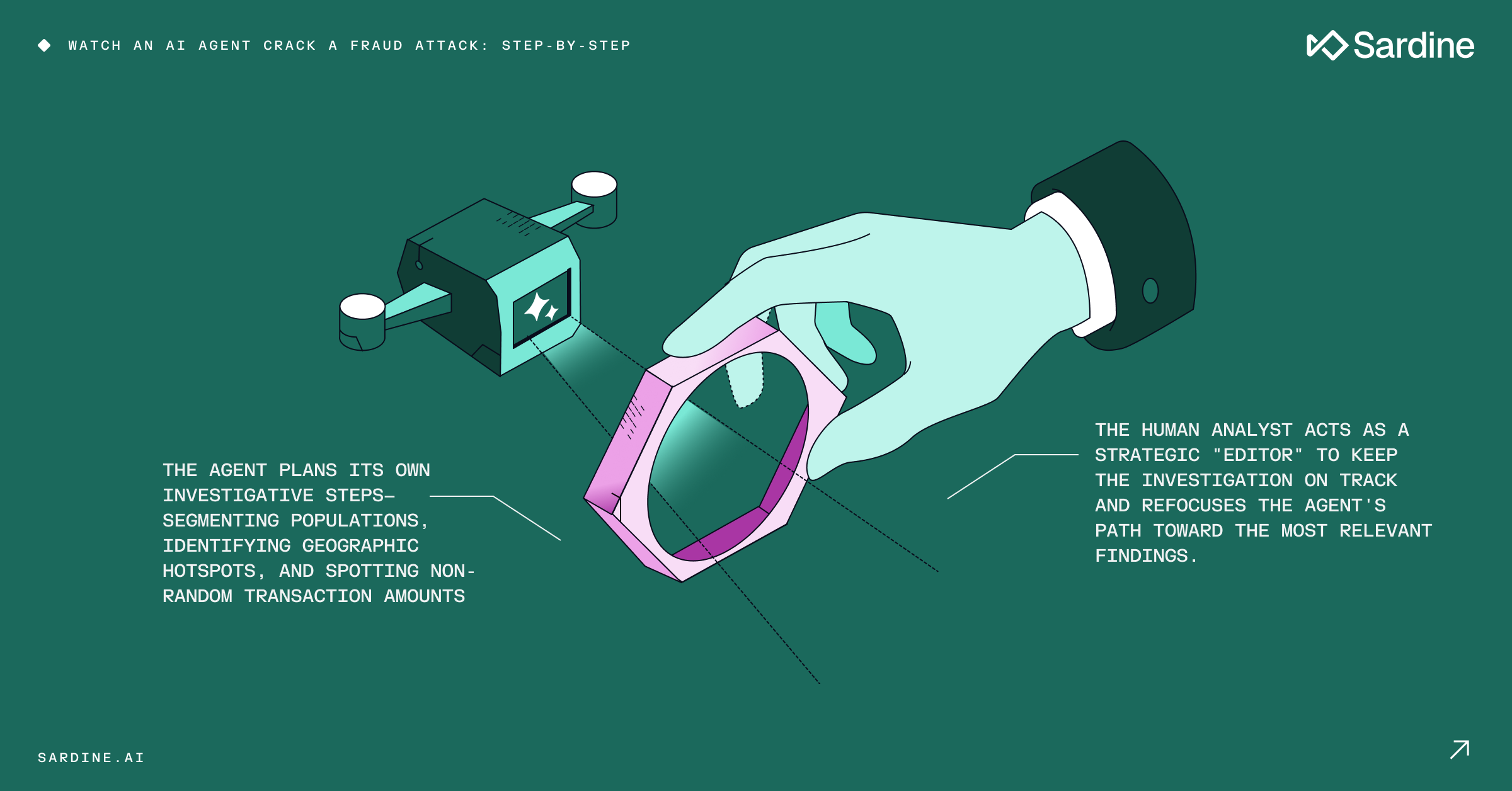
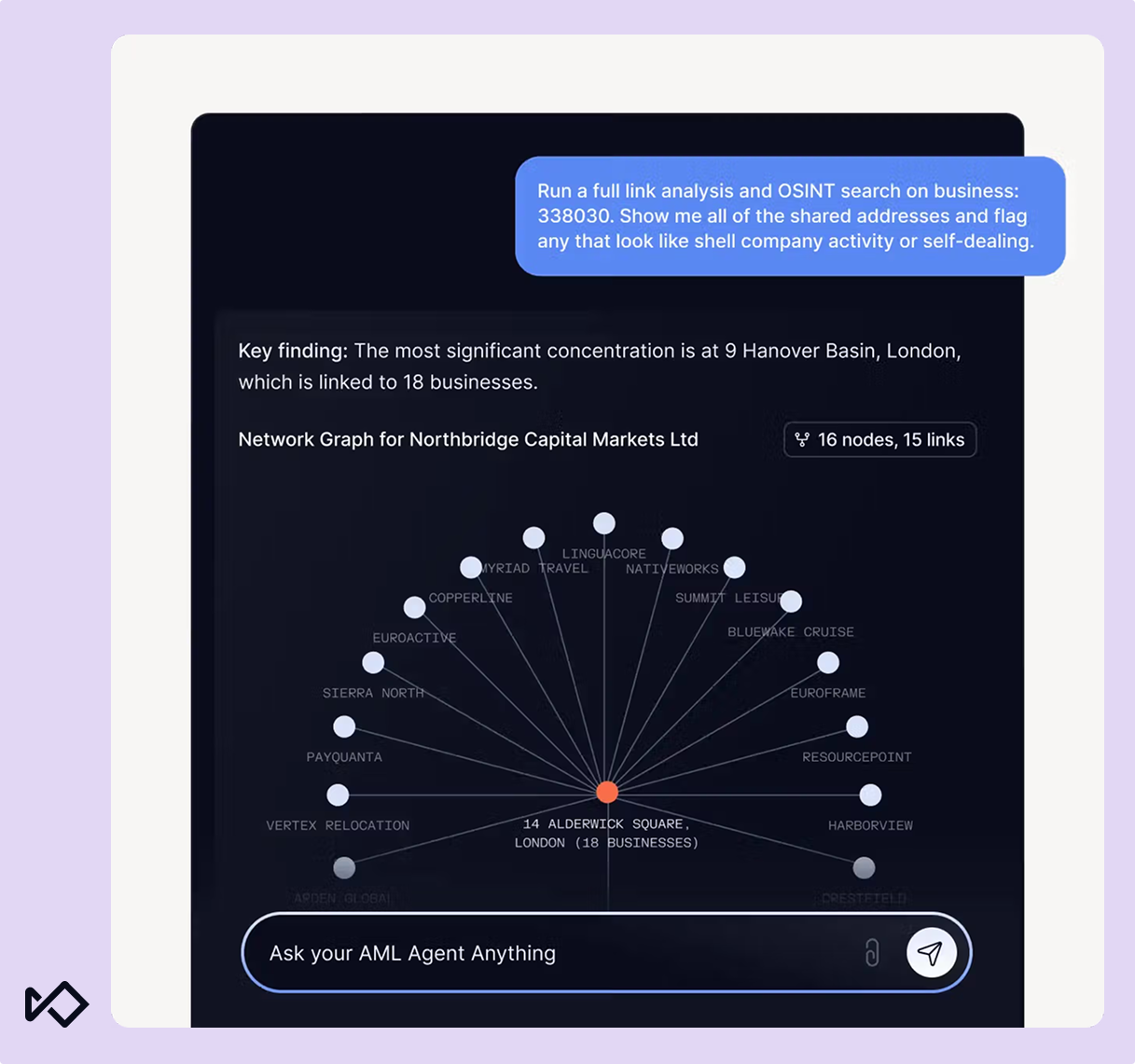
- Graph Analyst Agent: Maps relationships across IPs, emails, phones, devices, crypto activity, and other connected signals to surface suspicious clusters.
- Business Due Diligence Agent: Performs KYB research, business verification, owner checks, and restricted-industry classification.
- Compliance Screening Agent: Reviews sanctions, PEP, and adverse media matches.
Rather than simply having more agents, analysts now have one consistent way to use them across the work they already do.
The agent already knows what you’re looking at
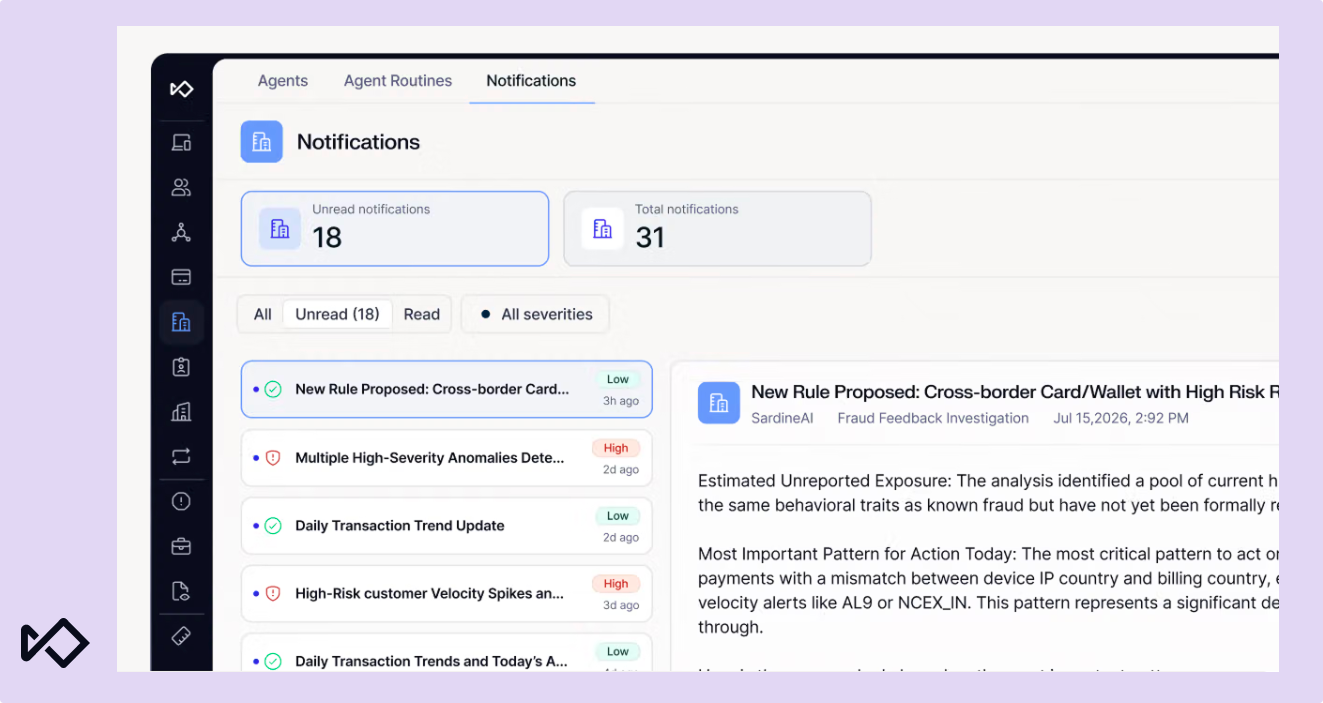
This is what removes the re-explaining. SardineAI can use the context of the page you’re already viewing, including a customer intelligence page, session, transaction, or alert. That means an analyst can ask, “What risk signals stand out across these transactions?”, “Give me an overview of the activity over the last 24 hours,” or “What connections does this customer have to other suspicious accounts?” without first copying IDs, pasting transaction details, or explaining what’s on screen.
The same applies to questions about Sardine itself. Ask which fields a customer API requires, how a specific rule works, or which endpoint handles a transaction status update, and SardineAI can answer directly from Sardine documentation without forcing you out of the dashboard to find it.
Instead of opening another tool and starting from zero, the agent starts where you already are.
Bring agents into the workflow however you operate
Agent Hub is built for both one-off investigation and repeatable operational work.
Chat in the dashboard: Open any agent directly to investigate a customer, explore a pattern, ask a product question, or dig deeper into finding what another agent already surfaced.
Run agents against alert queues: Attach an agent to an alert queue and it can run automatically on every new alert, with the relevant alert context already in hand. That gives teams a way to add agentic investigation to existing review workflows without rebuilding the process around a new tool.
Schedule recurring work: Agents can also run on a schedule for recurring reviews that would otherwise depend on someone remembering to check manually. On Sardine’s own crypto on-ramp, scheduled agents watch for traffic that’s dropped unexpectedly, review chargeback files for missed fraud patterns, and flag card-testing attempts as they begin trending. These are the same categories of recurring review many fraud teams still run by hand.
Connect agents into broader workflows: Agent Hub is designed to support more ways to invoke and coordinate agents beyond the Sardine dashboard. API and agent-to-agent integrations are part of the longer-term roadmap as Sardine expands how agents can work across external systems.
These approaches can work together. A team might run Compliance Screening automatically on every sanctions alert, schedule another agent to review recurring trends, and use the Graph Analyst Agent interactively when an analyst wants to investigate something further.
Evaluate agents before changes go live
As agents evolve, teams need a structured way to test how changes affect their behavior. Agent Hub supports evaluations for testing a new agent or assessing updates to an existing one.
Evaluations help teams validate how an agent responds across defined scenarios as they develop and refine it.
How customers are using Sardine AI agents today
More than 450 customers have access to Sardine AI agents today, with adoption up 2.5x since January. These agents are already working against live fraud and compliance decisions, not isolated test data. On Sardine’s own crypto on-ramp, agents review recurring operational signals like traffic changes, chargeback patterns, and card-testing activity.
The same model extends into regulated review workflows. In one bank deployment, agent decisions have matched sampled human reviews 99.9% of the time. Across that deployment, sampled human review hasn’t identified a sanctioned individual that the agent missed.
Rather than removing people from the process, users can now automate repeatable investigation work while keeping human judgment focused on the cases and decisions where it adds the most value.
The infrastructure behind trustworthy agentic operations
A general-purpose agent framework can connect an LLM to data and tools. That isn’t the same as putting an agent inside a live fraud or compliance process. To do that yourself, you’d still have to build the controls around the model: access to the right risk context, a full audit trail, human review, repeatable workflows, permissions, monitoring, and a consistent way to manage agents across the organization.
You’d also have to build the fraud and compliance context itself. Sardine’s agents run inside the same platform that already handles customer, device, behavioral, payment, screening, case, graph, and rule data. They don’t start from a blank prompt with a generic view of the customer.
That gives teams a common operating model across agents instead of a different interface, integration, and governance layer for every new agent they deploy. And as Sardine sees recurring investigation patterns across deployments, those patterns can become reusable capabilities in the standard agents rather than requiring each team to rebuild the same process from scratch.The result is more consistency: the same investigation process can run the same way whether it’s alert one or alert ten thousand.
Expanding Agent Hub across global environments
Agent availability is expanding across Sardine environments as regional infrastructure rolls out. In addition to Sardine’s production environments, agents are live in Sardine’s Canadian environment and in FIS environments used by bank customers, with additional regions rolling out over time.
Availability can vary by region based on the infrastructure and models supported in each environment, so specific agent capabilities may differ as that rollout continues.
What’s coming next
Agent Hub is expanding in three important directions.
- Build your own agents: Teams will be able to create agents for workflows specific to their own operating model instead of relying only on Sardine’s standard agents.
- Bring your own tools and data: Agent Hub will connect to more customer-owned systems and data sources, including MCP-based integrations, so agents can work with context beyond the Sardine platform.
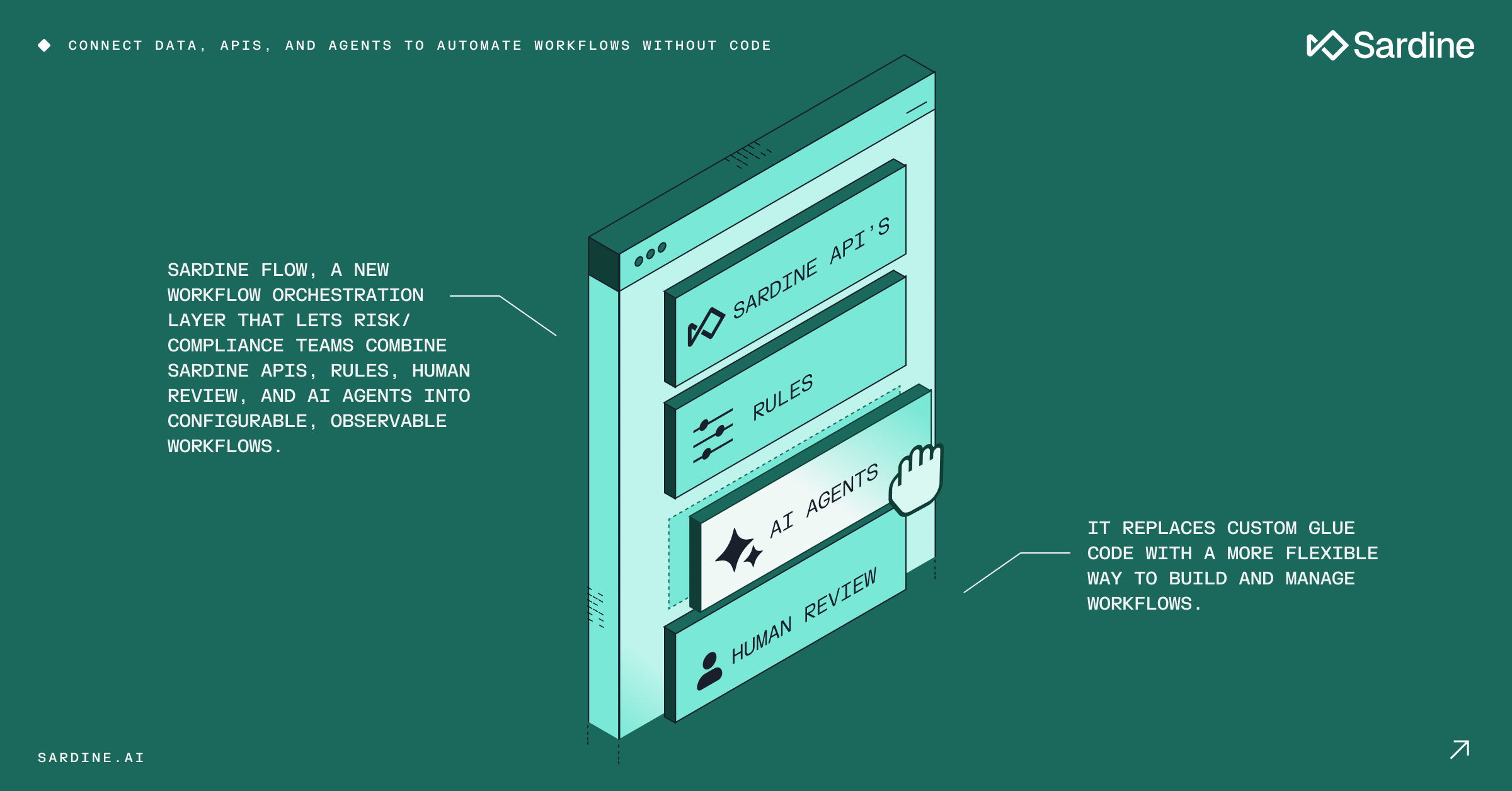
- Orchestrate broader workflows with Sardine Flow: Agent Hub gives teams one place to use, run, and manage Sardine AI agents. Sardine Flow takes that a step further by combining agents with Sardine APIs, customer rules, third-party data, and human review in configurable workflows.
That means a team can move from asking one agent to investigate an alert to coordinating an entire multi-step risk or compliance process without rebuilding the logic in custom code.
Agent Hub remains the place to interact with, run, monitor, and manage agents. Flow coordinates the broader process around them.
The agent your team needs shouldn’t be a new tab, a new login, or a fresh explanation of what’s going on. It should already be there.
Frequently Asked Questions
What is Agent Hub?
Agent Hub is the operating surface for Sardine’s AI agents. Teams can chat with agents, run them against alert queues, schedule recurring work, and evaluate new or updated agents from one place.
Which agents are available in Agent Hub?
Agent Hub includes Rule Assistant, Data Analyst, Doc KYC, OSINT Search, Business Due Diligence, Graph Analyst, and Compliance Screening agents.
How do agents know what I’m looking at?
Agent Hub can use the context of the Sardine page you’re viewing, including customer intelligence, session, transaction, or alert data, so you can ask a question without first explaining the investigation from scratch.
How can teams use agents in their workflows?
Teams can chat with agents directly in the dashboard, attach them to alert queues, or schedule recurring work. API and agent-to-agent integrations are part of the longer-term roadmap.
What’s the difference between Agent Hub and Sardine Flow?
Agent Hub is where teams interact with, run, evaluate, and manage Sardine AI agents. Sardine Flow is the broader orchestration layer for building multi-step workflows across agents, rules, APIs, external data, and human review. As the products come together, teams will be able to orchestrate agentic workflows through Flow while using Agent Hub as the operating surface for the agents themselves.
Is Agent Hub available today?
Yes. Agent Hub and its core agents are live today, with availability continuing to expand across Sardine environments. Specific agent capabilities may vary by region as infrastructure rolls out.
How do I get started?
Contact us to learn more about Agent Hub, or reach out to your Sardine account team if you’re already a customer.