

Compliance programs don't fail because teams lack effort. They fail because the tooling wasn't designed for the decisions it's actually asked to support.
This month's releases address that directly: investigation controls that enforce quality at scale without adding analyst overhead, self-serve configuration that closes the distance between compliance policy and production, and a certification milestone that supports market readiness for card issuers.
The highlights:
- Customer profile analytics. Build custom charts scoped automatically to the customer you're reviewing across seven models, without manual filtering or tab switching.
- Embedded dashboard. Surface Sardine's fraud and compliance views inside your internal tools so your team gets the data they need without leaving the systems they work in.
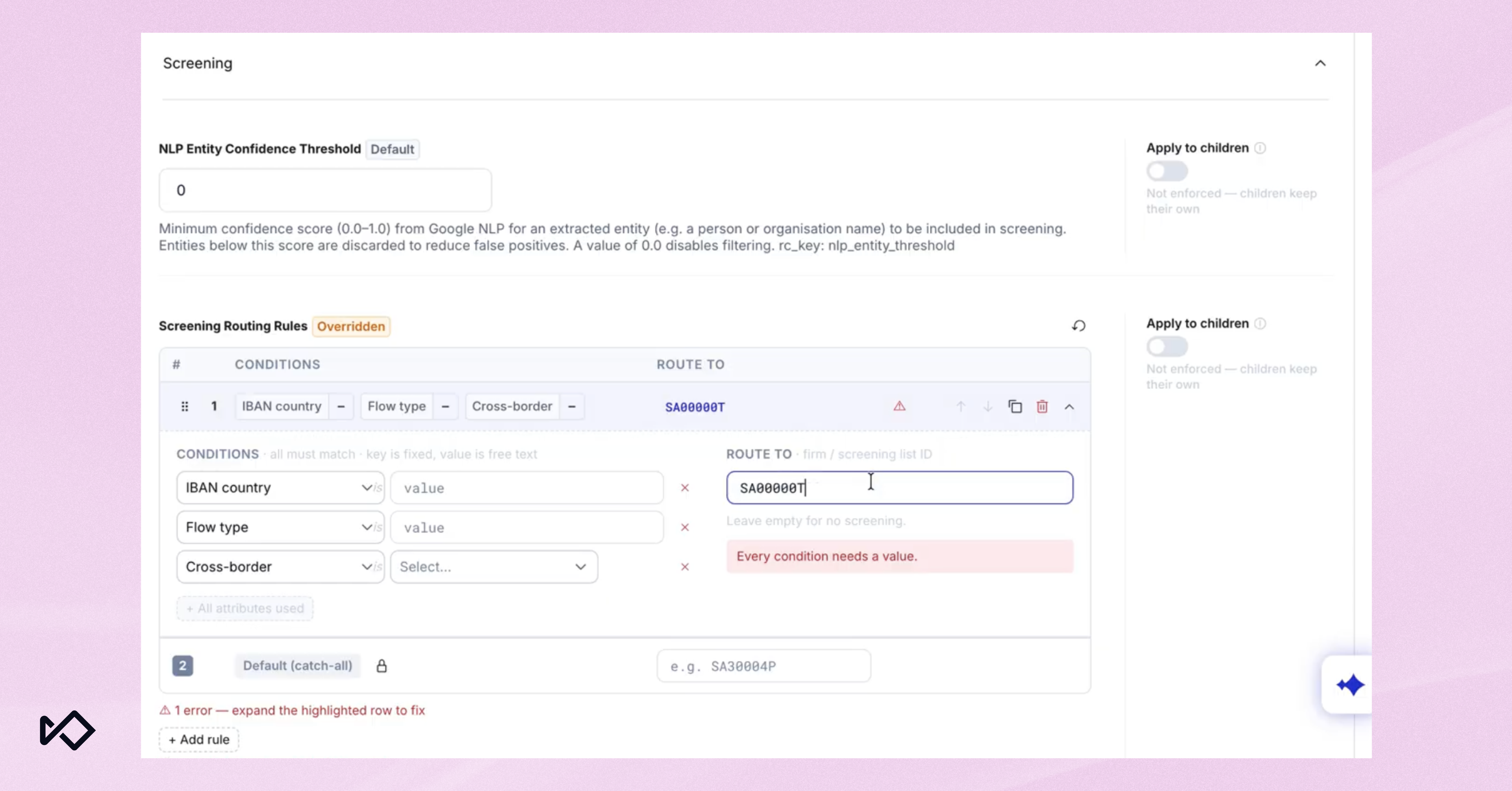
- Transaction-level screening configurations. Route AML screening logic by payment method, IBAN country, and transaction type, configured directly in the dashboard without an engineering ticket.
- Alert checklists. Define the investigation steps that matter and gate alert resolution until they're complete, so process consistency and audit documentation happen as a byproduct of the workflow.
- Alert history tab. Every status change, assignment, and system action on an alert in one chronological view, giving investigators full context and giving auditors a clean record.
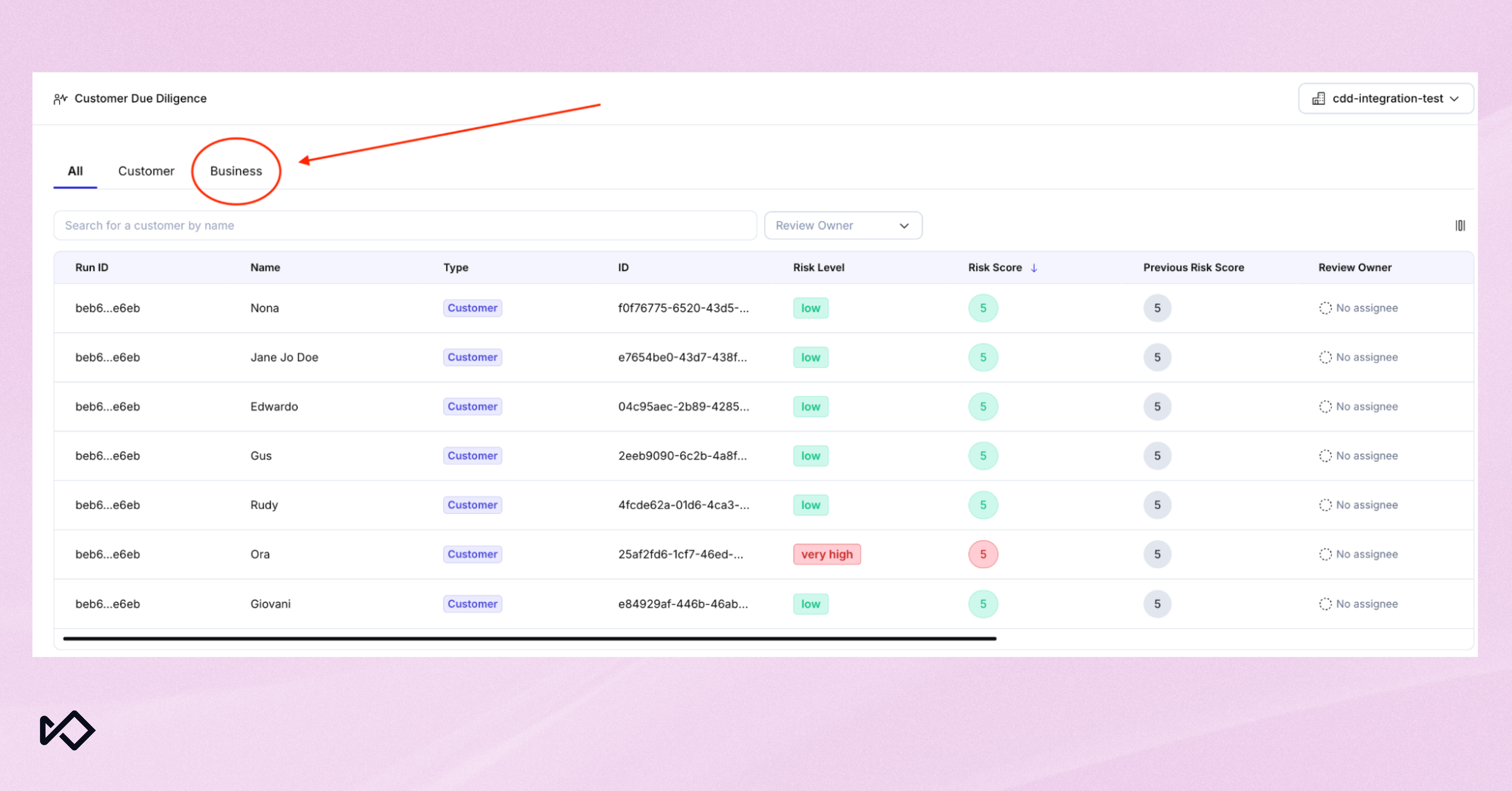
- CDD for businesses. Corporate due diligence built into the same workflow your team already uses for individual customers, with no platform switching or process rebuild required.
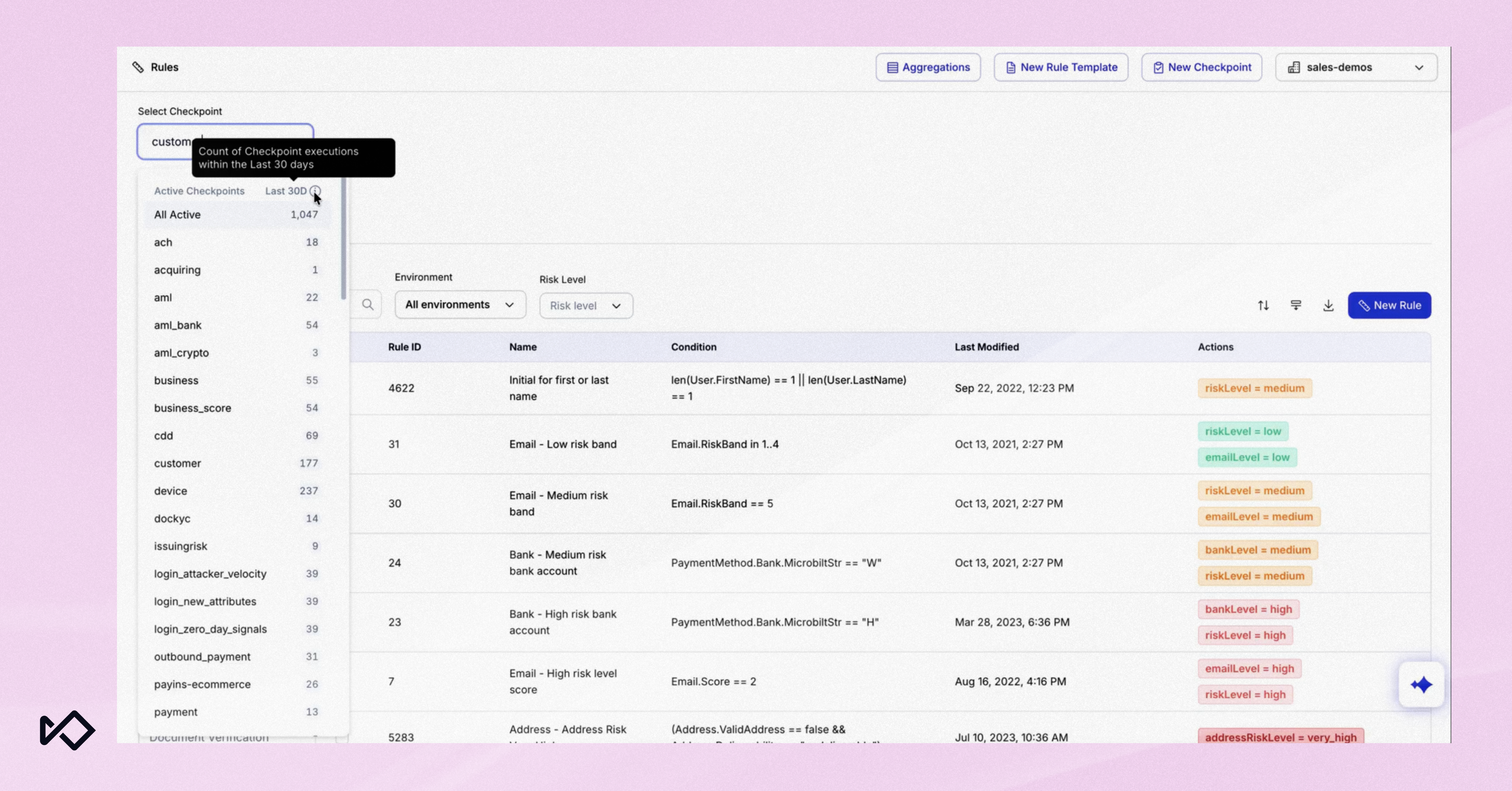
- Checkpoint analytics. See which checkpoints are actively processing traffic before touching your rule configurations, so cleanup and audits start from accurate ground truth.
- EMVCo 3DS certification for ACS. Card issuers can now reference Sardine's certification directly in Visa, Mastercard, and network submissions, and enter regulated markets that previously required their own certification process to unlock.
More visibility and control across your workflows
Customer profile analytics
Most of the context that matters for a customer review lives across multiple views, which means analysts spend time switching models, resetting filters, and manually tracking which customer they're looking at rather than reviewing what's in front of them.
The Customer Analytics widget in the Customer Profile Overview tab changes that. Build custom charts from any model linked to a Customer ID, with the current Customer ID automatically applied as a filter across every chart you create. Seven core models are available for visualization simultaneously, giving analysts a comprehensive view of customer activity without ever leaving the record they're reviewing.
Embedded Sardine dashboard
Asking fraud and compliance teams to context-switch into a separate platform to pull up transaction histories, customer profiles, or review queues creates friction that compounds across every review and every shift.
The embedded dashboard feature lets your engineering team surface specific Sardine views directly inside your existing internal applications using secure short-lived tokens and iframes. The dashboard automatically strips its standard navigation to fit your internal layout, so analysts get the data they need without leaving the systems they already work in.
Tokens load only on your approved domains, and sessions refresh automatically in the background when they expire, keeping the security model tight without interrupting your team's workflow.
Checkpoint analytics
The rules page now displays 30-day execution counts for every checkpoint directly in the interface, so active configurations are immediately distinguishable from legacy or low-volume ones.
Before archiving a checkpoint, modifying a rule, or auditing your fraud prevention logic, your team can filter to only the checkpoints currently processing traffic and work from accurate ground truth rather than assumptions about what's actually in use. For large rule sets that have accumulated over time, this makes cleanup and ongoing maintenance significantly faster.
Stronger compliance coverage and investigation quality
Transaction-level screening configurations
AML screening requirements vary by transaction type in ways that matter operationally. A domestic Instant SEPA transfer carries different risk than an outbound WISE payment, and cross-border transactions through high-risk corridors need different coverage than routine domestic flows. When screening logic can't reflect that nuance, teams are either over-screening what doesn't require it or leaving gaps where it does.
Closing those gaps has historically meant custom API code and an engineering release every time policy changes. The new Screening Configurations tab in the Dashboard's Screening Hub gives compliance and operations teams direct control over that logic without either.
Build if/then routing rules using IBAN country, flow type (Regular SEPA, Instant SEPA, WISE), and domestic versus cross-border status as variables, and route transactions to specific screening firms and watchlists based on those conditions. A JSON editor with syntax highlighting and real-time validation catches formatting errors before rules go live, and when policy changes, your team updates it directly in the dashboard without waiting on an engineering release.
Alert checklists
Most compliance programs have documented what a thorough investigation looks like. Fewer have a reliable way to enforce it when teams are working through high volumes, and when analyst judgment varies, the weakest reviews become the liability.
Alert checklists let compliance administrators define required investigation steps at the queue level and make them mandatory, so an analyst cannot close or resolve an alert until every required item is complete. Every checklist action is automatically logged to the alert history, so documentation happens as a byproduct of the workflow rather than a separate task, and questions can be weighted so scoring feeds directly into QA processes.
For teams that need to demonstrate procedural rigor to regulators or auditors, the combination of gated resolution and automatic history capture covers both requirements without additional work. Checklists are built from a centralized question bank and reusable across queues, so standardized steps deploy wherever they're needed without rebuilding from scratch.
Alert history tab
When something goes wrong with an alert, reconstructing what happened has typically meant cross-referencing notes, status logs, and assignment history from separate places. That's time investigators don't have, and the gaps it creates are exactly what auditors find.
The Alert History tab puts every event on a single chronological record, covering status changes, reassignments, checklist updates, and automated system actions in the order they occurred. Investigators get full context on an alert's lifecycle without hunting across the dashboard, and audit documentation builds automatically as the work happens.
The tab is available now within Alert Management, with the same history view coming to cases, customers, and businesses in upcoming releases.
CDD for businesses
Onboarding and monitoring corporate entities carries different requirements than individual customer reviews, with more complex operational structures, entity-specific risk indicators, and regulatory standards that vary by business type.
Business CDD in Sardine brings corporate due diligence into the same dashboard your compliance team already uses, with purpose-built data collection, risk assessment, and verification workflows for corporate entities. Teams can manage corporate profiles, track business relationships, and evaluate entity-specific risk indicators without switching platforms or rebuilding processes, removing the infrastructure gap that typically comes with expanding a commercial client base or meeting the due diligence requirements of regulatory banking implementations.
Removing the barriers to regulated markets
EMVCo 3DS certification for Sardine ACS
Sardine’s Access Control Server is now EMVCo 3DS 2.x certified, giving issuers a faster path to deploy 3DS across regulated markets and major card networks.
Certification is required for PSD2 Strong Customer Authentication in the European Economic Area (EEA), supports market entry across much of APAC, and serves as the interoperability baseline for card networks. Without it, issuers often need to complete their own certification work before they can launch.
With Sardine ACS, issuers can reference Sardine’s certification number in Visa, Mastercard, and American Express submissions instead of starting from scratch. The certification covers frictionless, challenge, and decoupled authentication flows across web, mobile, and 3RI transactions, with support for EMV 3DS message versions 2.1.0 and 2.2.0.
For issuers expanding into regulated markets, that means fewer certification bottlenecks, less custom compatibility work, and a more direct path to compliant 3DS authentication.
Want to see any of this in action? Get in touch for a demo. Current customers can find the full details in our release notes and changelog.